
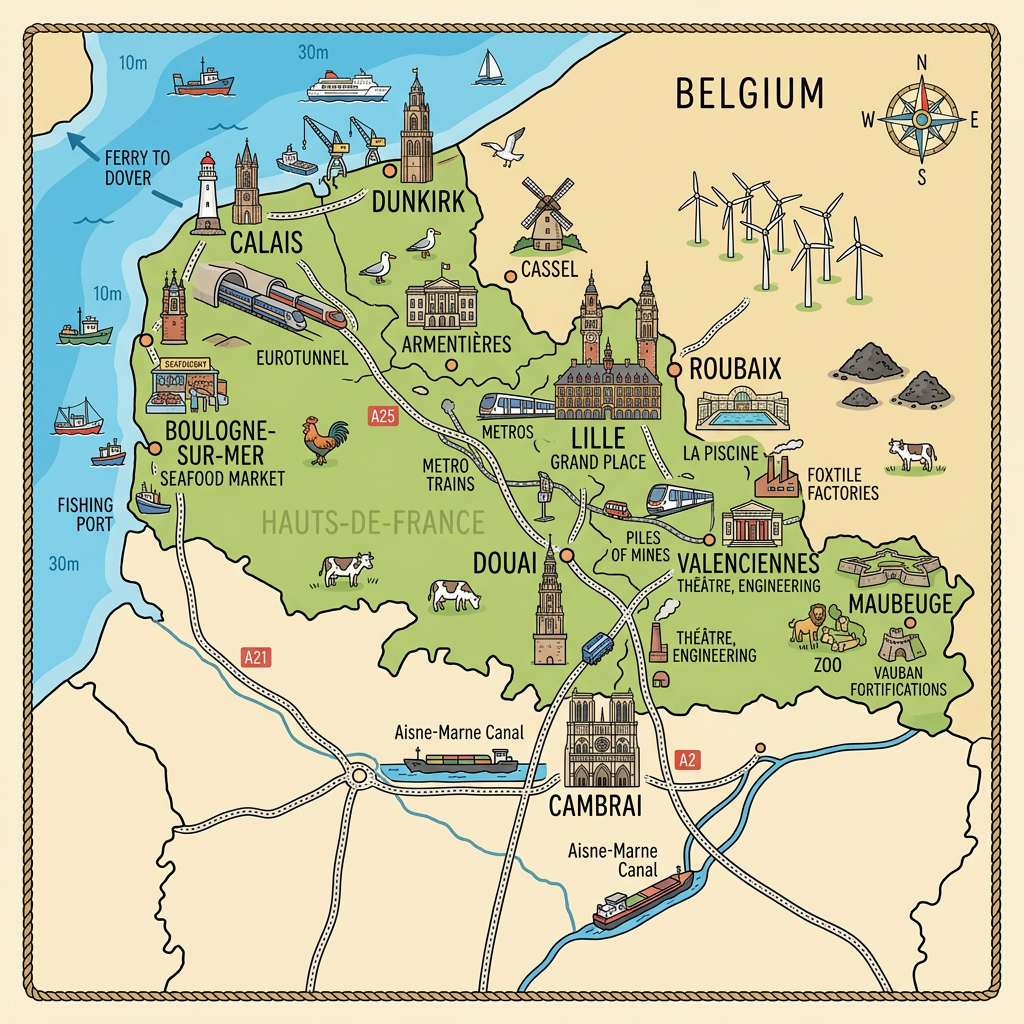
What you need to know about the Nord department ?
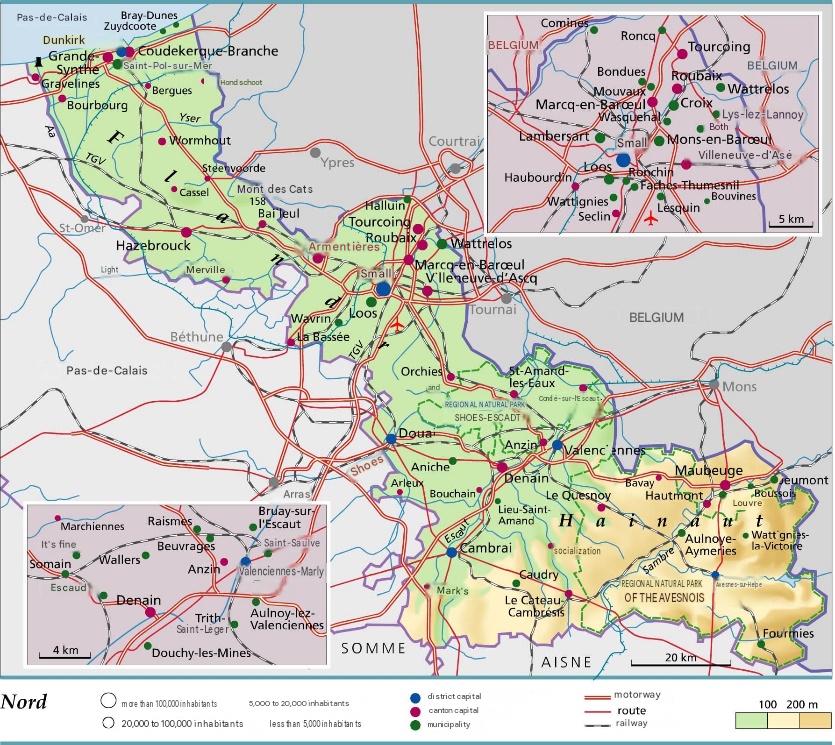
Indeed, we present to you a department that is part of the Hauts-de-France region. It is actually department 59, called the Nord department. It is one of the northernmost French departments in France. Furthermore, the largest city, prefecture, and administrative center of the department is called Lille. However, its sub-prefectures are: Valenciennes, Avesnes-sur-Helpe, Cambrai, Douai, Dunkerque.
The number of inhabitants, known as the Nordistes, is currently 2,611,293 and the surface area of the territory is 5,743 km², which means that the population density is 455 inhabitants per km². This means that department 59 is the most populous in France. Furthermore, its metropolitan area is where the majority of people live, meaning more than 50% of the inhabitants of the Nord department. Regarding the administrative subdivisions, the Nord department has 6 arrondissements, 21 legislative constituencies, 41 cantons, 17 intercommunal entities, and 648 communes.

Which departments border the Nord department?
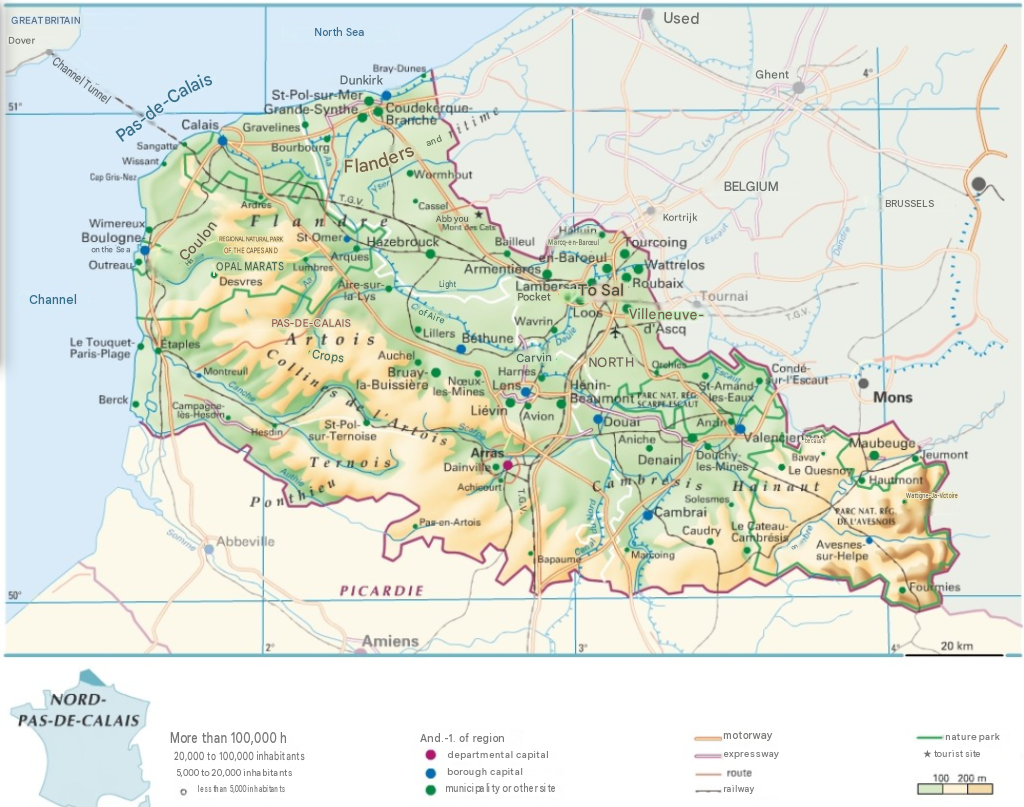
Since department 59 is part of the Hauts-de-France region, its neighbors are the department of Aisne, the Pas-de-Calais department, and the Somme department. Furthermore, it shares a common border with Belgium, specifically with the Belgian provinces of Flanders and Hainaut. It is also bordered by the North Sea. Several waterways cross it, notably the Yser (a maritime navigable waterway), the Lys, the Escaut, the Scarpe, and the Sambre. The Deûle trench crosses Lille, its prefecture.
What is the climate like in the Nord department?
Department 59 benefits from a warm maritime climate without a dry season according to the Köppen-Geiger classification. This territory has an exceptionally mild character along the coasts, with low temperature variations (mild winters with little snow and cool summers).
As one moves away from the coast, the climate becomes more continental, with fewer maritime influences but rather more pronounced temperature contrasts. The Nord department is an area with high precipitation. Indeed, even during the driest month, there are many showers. Over the year, the typical temperature in the Nord department is 10.2°C and regular precipitation totals 698.1 mm.
What are the most important cities in the Nord department?
We have ranked these cities based on the number of tourists who visit them. Therefore, these 10 cities we present to you are the 10 must-visit tourist cities when passing through the Nord department:
- Lille
- Roubaix
- Dunkerque
- Villeneuve d’Ascq
- Marcq-en-Baroeul
- Bondues
- Saint-Amand-les-Eaux
- Lambersart
- Gravelines
- Tourcoing
- Mons-en-Baroeul
What are the largest communes in the Nord department?
To make this ranking, we referred to the area of each commune in the Nord department.
- Locquignol
- Dunkerque
- Trélon
- Loon-Plage
- Saint-Amand-les-Eaux
- Morbecque
- Bailleul
- Bourbourg
- Lille
- Raismes
Regarding this second ranking of communes in the Nord department, we grouped them according to population density per km2:
- Lille
- Dunkirk
- Villeneuve-d’Ascq
- Douai
- Marcq-en-Barœul
- Roubaix
- Tourcoing
- Valenciennes
- Wattrelos
- Maubeuge
FAQ: Nord map
The Grand-Place in Lille is an iconic place filled with history and Flemish architecture. The La Piscine museum in Roubaix surprises visitors with its exceptional setting.
Spring offers mild weather for strolling through historic city centers. Summer is also very lively thanks to the famous Lille Braderie.
The tram and metro network greatly facilitates travel within the Lille metropolitan area. A car remains useful for exploring rural areas and canals, however.
