Nestled between the desert and the mountains, Petra attracts the curious with its fascinating history, breathtaking landscapes, and unique carved architecture. This ancient Nabataean city is located in the south of Jordan, sheltered by spectacular pink cliffs and vast rocky expanses. Travelers passionate about archaeology or ancient cultures consider Petra an unmissable site, whether for its place among the UNESCO World Heritage sites or for its mysterious aura that has endured for centuries.
Overview of my impressions:
In my eyes, Petra goes far beyond the simple status of an archaeological site to become a true lesson in natural and human aesthetics. I am particularly struck by the chromatic palette of the rocks, ranging from powder pink to blazing ochre depending on the sun’s angle, which makes every hour of the visit unique. My point of view is that one does not come here just to see monuments, but to feel the mastery of a people who knew how to tame the desert and carve eternity directly into the rock face.
What are the origins and history of Petra?
Tracing back through time at Petra means diving into the rich history of the Nabataean civilization. Around the end of the 4th century BC, the Nabataean people transformed this isolated place into a flourishing commercial crossroads thanks to its strategic geographical position between Arabia and the Mediterranean. Petra quickly became a convergence point for caravans loaded with spices, incense, and silks.
Over the centuries, the Nabataean city prospered and grew wealthy, benefiting from trade with neighboring empires. The arrival of the Romans marked a decisive turning point, integrating Petra into the Roman province of Arabia. Despite this change, many remains still testify today to the power and ingenuity of the Nabataean civilization, notably their talents for taming an arid nature.
Before flying off to the Middle East, it might be useful to consider how to properly prepare your trip abroad so as not to forget anything essential. If this immersion in the Jordanian desert inspires you for your decoration, adding a wooden world map wall art will bring a natural and authentic touch to your interior. Finally, if you are looking for other horizons after your journey, explore our selection of countries to visit to continue discovering the wonders of our planet.
What makes Petra’s architecture so special?
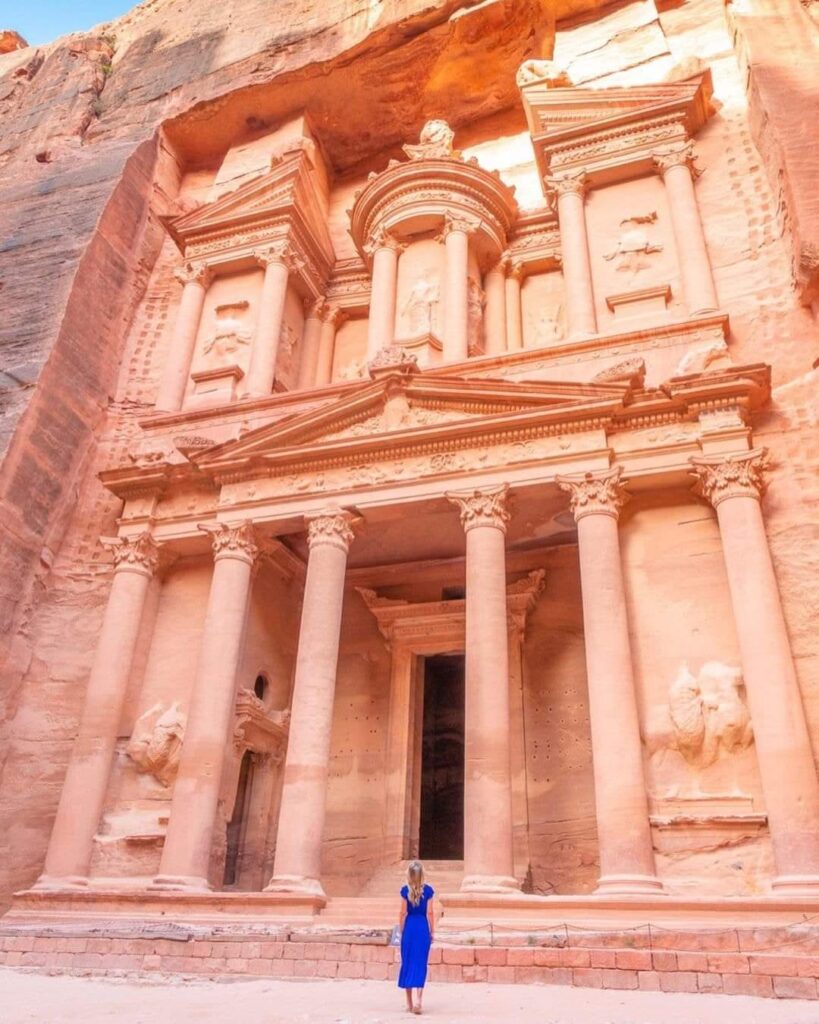
The exceptional landscape of Petra is inseparable from its rock-carved architecture. Unlike other ancient cities, few traditional buildings remain here. It is mainly the monuments carved directly into the pink sandstone cliffs that captivate visitors. This unique choice gives Petra its enigmatic aspect, almost unreal when the sun changes the colors of the surrounding mountains.
The Nabataean artisans mastered this direct carving technique perfectly. They took advantage of the rugged topography of the archaeological site to build temples, tombs, and monumental sanctuaries, some reaching several tens of meters high. These masterpieces testify to the creativity and advanced technical skill of the Nabataean civilization.
| Feature | Destination Details |
| Location | Southern Jordan desert, near Wadi Musa |
| Distinctive Color | Nicknamed the “Rose City” due to the local sandstone |
| Iconic Monument | Al-Khazneh (The Treasury) |
| Architecture | Facades carved directly into the rock (troglodytic) |
| Protection | Listed as a UNESCO World Heritage Site |
Iconic and Symbolic Monuments
Among all the sites of the Nabataean city, the Khazneh (also called the Treasury) remains the most famous. Its grandiose facade adorned with columns fascinates all those who finally walk through the Siq, this long winding canyon leading to the heart of Petra. Other remarkable monuments punctuate the site, such as the Al-Deir Monastery, accessible after an impressive flight of stairs, or the theater carved into the rock.
The amphitheater, the royal tombs, and the temples are other remarkable examples of this unique architecture. Each structure was designed to fit the contours of the desert and mountains, highlighting the Nabataeans’ ability to combine aesthetics and adaptation to their harsh environment.
Hydraulic System and Technical Innovations
Despite a dry climate and the absence of permanent rivers, Petra did not lack water thanks to the innovations of the Nabataean civilization. Mastering the art of channeling water, these builders invented complex networks of aqueducts, dams, and cisterns to carefully store every drop collected during the rare rains.
This genius for water management largely explains why the Nabataean city was able to prosper for so many years in the middle of the Jordanian desert. Visiting the archaeological site, discovering the traces of these installations sheds new light on daily life and the level of sophistication reached during Antiquity.
Why is Petra listed as a UNESCO World Heritage Site?
Petra has been on the UNESCO World Heritage List since 1985, both for its extraordinary archaeological importance and for its remarkable preservation. This listing recognizes both the exceptional universal value of the Nabataean city and the urgency to protect this fragile cultural site, threatened by time and tourist influx.
Besides its architecture carved directly into the mountain, Petra also embodies a rare testimony of the cultural and economic exchanges of Antiquity. Its conservation today helps to perpetuate the memory of the Nabataean civilization and to inspire researchers as well as adventurers and enthusiasts of ancient history.
During my crossing of the Siq, this narrow canyon leading to the Treasury, I deliberately kept my head down so as not to spoil the surprise. At the moment the walls parted, I looked up at the facade of the Khazneh and had a sudden realization about the fragility of our own modern architectures. Facing this millennial facade that has survived earthquakes and wind, I felt a deep respect for this creative patience that seems to have disappeared today. It was by touching this warm sandstone that I truly understood the intimate connection between geology and the history of civilizations.
How to visit Petra and fully enjoy the archaeological site?
Exploring Petra is much more than a stroll through an open-air museum. The journey often begins with the famous Siq, that deep gorge framed by walls polished over millennia by the water and wind of the desert. From the very first breakthrough, the architectural spectacle transports you to another era and invites contemplation.
To make the most of the visit, there are different trails suited to every level of endurance. Some paths climb up to panoramic viewpoints, revealing the full extent of the surrounding mountains and the magic of the colored rocks. Since everyone moves at their own pace, a whole day is rarely enough to explore everything.
Practical tips and moments not to miss
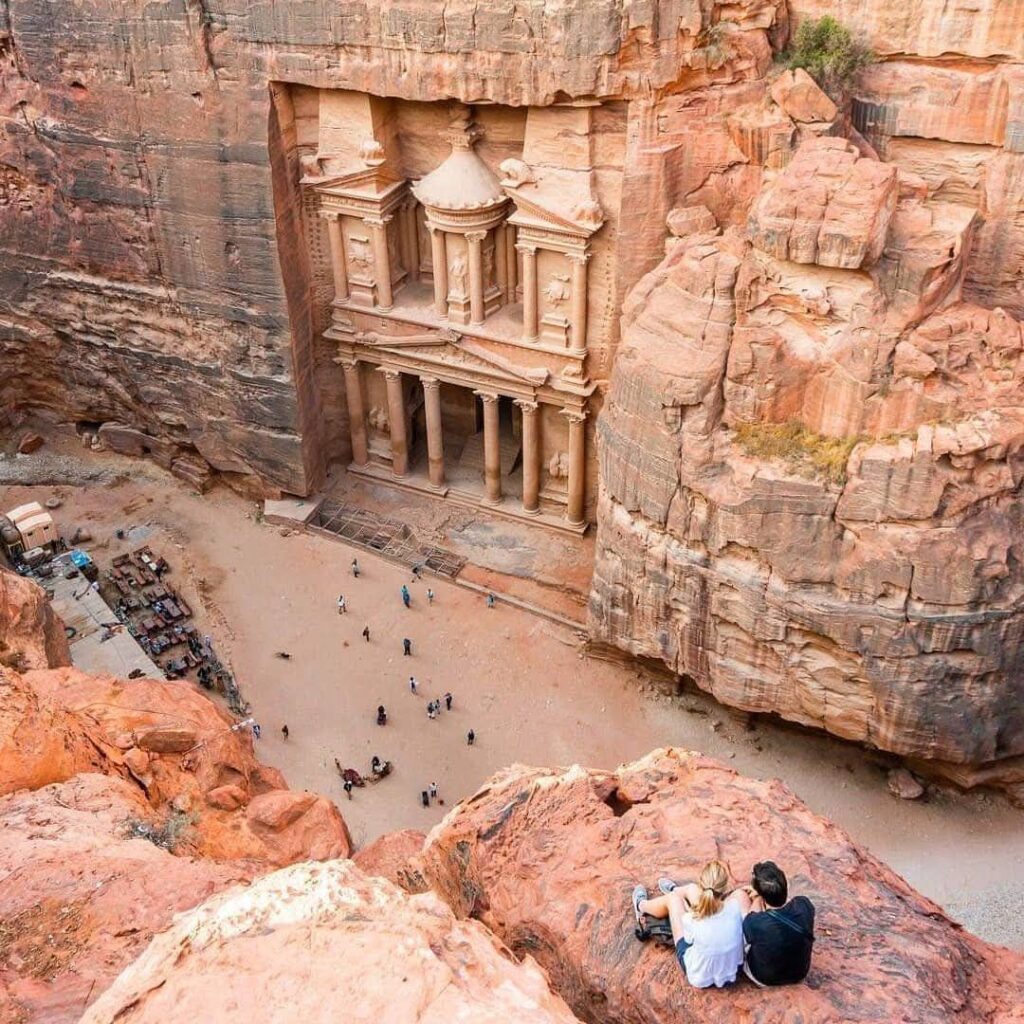
A successful stay requires a few tips. Wearing good walking shoes makes it easier to progress on the sometimes steep trails. Anticipating the hot weather helps organize breaks and refreshments, especially since temperatures quickly reach highs under the desert sun.
Some monuments should be prioritized depending on your desires or availability. Among them:
- The Khazneh, ideal early in the morning to avoid the crowds.
- The Al-Deir Monastery, perfect for enjoying an unforgettable panorama at sunset.
- The High Place of Sacrifice, reserved for enthusiasts of ruins steeped in mystery.
By following local advice, your route offers unexpected surprises, off the classic tourist circuits. Warm encounters or unusual discoveries often mark the path of those who take the time to observe stones and landscapes with curiosity.
Respect and preservation of the site
Because Petra attracts thousands of visitors each year who come to admire the magic of the desert and the ochre-tinted mountains, adopting a respectful attitude towards the archaeological site remains essential. Staying on marked trails and limiting soil erosion helps preserve this natural and historical jewel.
Awareness and local initiatives contribute to preserving this UNESCO World Heritage site for future generations. Highlighting the Nabataean city, understanding its ecological challenges, and supporting the local inhabitants offer the opportunity to live a deeply enriching experience, filled with wonder at the timeless splendor of Petra.
Petra: immersion in the heart of the Nabataean city in Jordan
One day is enough to see the major sites like the Treasury and the Monastery, but two or three days are recommended to venture onto the less frequented hiking trails such as the High Place of Sacrifice.
Yes, the “Petra by Night” event offers a nighttime experience where the path of the Siq and the forecourt of the Treasury are illuminated by thousands of candles. It is a unique sensory immersion, accompanied by traditional Bedouin music.
Petra was not only a burial place, it was a strategic commercial hub. It served as a crossroads for caravans carrying incense, myrrh, and spices between Arabia, Egypt, and the Mediterranean.