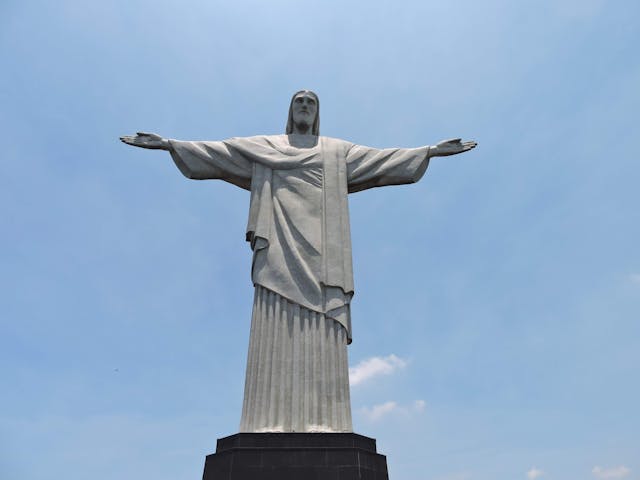
Discovering the Christ the Redeemer means immersing oneself in one of the most recognizable symbols of Rio de Janeiro and of Brazil as a whole. Proudly perched on Mount Corcovado, this monumental statue attracts millions of visitors every year. How did this project come about and why does it fascinate so much? A fascinating dive into its history, its bold architecture, and the spiritual dimension surrounding this masterpiece.
Essential to my view of this stone giant: I consider that this statue transcends the simple religious dimension. Furthermore: for me, it is the very embodiment of welcome and universal brotherhood. I feel a particular emotion facing its Art Deco architecture which, despite its imposing mass, seems to float with a mystical lightness above the bay of Rio. In my opinion, it is the benevolent sentinel that gives the city its soul and its spiritual verticality.
The Fascinating Origins of Christ the Redeemer
The story of Christ the Redeemer begins long before its actual construction. As early as the late 19th century, some residents of Rio de Janeiro were already dreaming of erecting a monumental statue visible from the entire city. This idea took shape thanks to the involvement of the Catholic Church, which wanted a strong symbol to celebrate the centenary of the country’s independence in 1922. The goal was clear: to offer Brazil an emblematic monument of its faith and unity.
Integrating such a work requires an exceptional site. The choice then fell on Mount Corcovado, overlooking Guanabara Bay and offering a spectacular view at 710 meters altitude. This summit became the site of a huge construction project where artists, engineers, and the faithful united their skills and passions.
For those wishing to extend the adventure on the continent, it is fascinating to discover how to travel differently in Latin America to get off the beaten path. You might also be tempted by a destination in Patagonia for a striking contrast with the Carioca heat. This journey can also be a significant step for anyone dreaming of traveling around the world in search of universal symbols.
Technical Challenges and International Collaboration for the Construction
| Aspect | Technical Details |
| Inauguration date | October 12, 1931 |
| Lead engineer | Heitor da Silva Costa |
| Sculptor | Paul Landowski (French) |
| Total height | 38 meters (including 8m pedestal) |
| Cladding material | Soapstone |
Building the Christ statue was no small feat. The technical design involved significant challenges due to changing climatic conditions and the geological characteristics of Mount Corcovado. Brazilian engineers worked hand in hand with creators from Europe, giving birth to a unique architectural adventure.
Paul Landowski and the European Artistic Contribution
One name stands out inevitably: Paul Landowski. This artist of Franco-Polish origin envisioned the final design of the Christ, arms open as a sign of peace and welcome. His approach combines finesse in modeling and visual power, giving the monumental statue a peaceful yet impressive aura. The facial elements were made in France before being assembled in Rio de Janeiro, highlighting the international aspect of the project.
Alongside him, the Brazilian engineer Heitor da Silva Costa was responsible for adapting the initial model to local constraints. Thanks to this collaboration between European art and Brazilian expertise, the silhouette of the Christ blends harmoniously into the landscape.
Materials and innovative methods at the time
The core of the Christ the Redeemer is made of reinforced concrete, a major innovation for the era. This structure ensures the necessary strength against weather and the frequent lightning strikes hitting Mount Corcovado. For the finish, the choice of steatite provides superior resistance to moisture, while offering subtle shades under the tropical light.
The construction phase spanned about nine years, from 1922 to 1931. Workers, artisans, and volunteers actively participated, paying tribute to the collective fervor surrounding the project. In October 1931, the statue finally revealed its impressive dimensions: 30 meters tall, not counting its 8-meter pedestal, with an arm span of 28 meters.
A religious and cultural icon inseparable from Rio de Janeiro
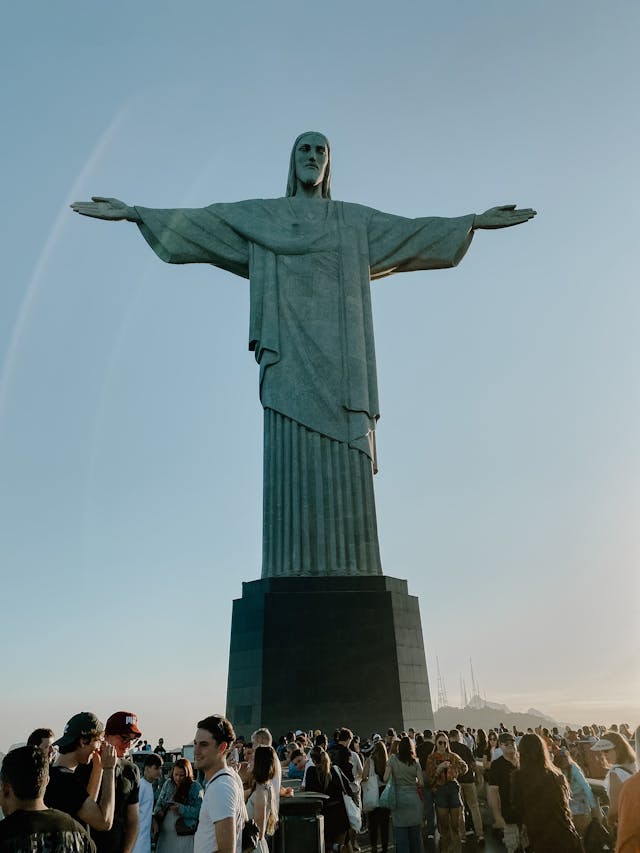
The significance of the Christ the Redeemer far exceeds its architectural dimension. Since its inauguration, it has established itself as an omnipresent landmark in the daily life of Cariocas and Brazilians. It also becomes an international symbol of peace and tolerance, recognized well beyond Latin America.
A pilgrimage site for the Catholic Church
This monumental monument is closely linked to the tradition of the local Catholic Church. Several ceremonies are organized there throughout the year, welcoming crowds who come to share their devotion on Mount Corcovado. Religious festivals take on a special significance here, strengthening the bond between the population and spirituality.
For many, visiting the Christ is equivalent to making a pilgrimage, as the statue embodies a protective figure. It also plays a central role during major national religious events, further illustrating its importance in contemporary Brazilian society.
I still see myself at the top of Corcovado, breathless after the ascent, while a blanket of fog still enveloped the base of the statue. I waited in silence. Then: I was struck by a profound awareness when the clouds parted, revealing the vastness of the city at my feet. This experience nourished my reflection on our place in the world. Then: I realized that the greatness of a monument is not measured by its height, but by its ability to make us feel both small and immensely connected to the rest of humanity.
The cultural impact on the city and Brazil’s image
The Christ the Redeemer firmly establishes itself as the ambassador of Rio de Janeiro. Its silhouette is found on posters, in the media, or during popular festivities. From a tourist perspective, it generates a constant flow of curious visitors eager to behold the monumental statue up close and admire the exceptional panoramic view.
Over the decades, this iconic monument has inspired artists, writers, and filmmakers. Much more than just a statue, it has become an essential pillar of the collective imagination surrounding the Brazilian destination and its cultural identity.
Some unusual facts and practical tips about Christ the Redeemer
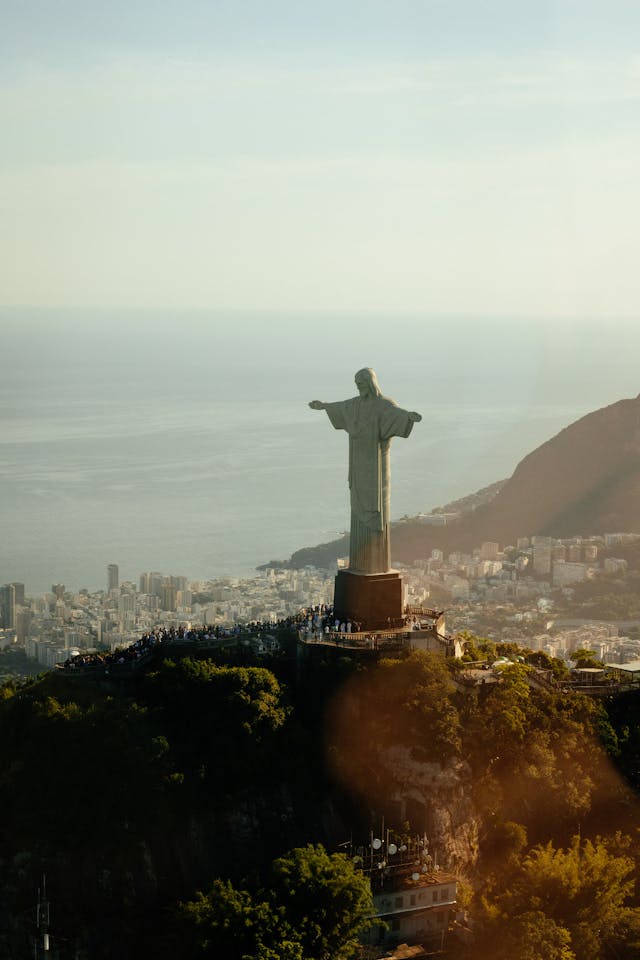
Although its austere appearance is impressive, several anecdotes make the visit to Christ the Redeemer even more captivating. Some details sometimes escape the hurried glance but add an unexpected touch to the experience. Taking the time to discover these little secrets enriches the understanding of the monument.
- The monument has been part of the New Seven Wonders of the World since 2007, joining other global heritage treasures.
- Several restorations have been necessary to repair damage caused by lightning.
- Access to the summit can be done by rack railway, official minibus, or on foot for hiking enthusiasts.
- On certain evenings, special lighting transforms the statue, especially during sporting, religious, or charitable events.
- The panorama offered at the foot of the Christ includes Copacabana beach, Sugarloaf Mountain, and a large portion of Guanabara Bay.
Preparing your visit involves choosing the right time, often early in the morning or late afternoon, to avoid crowds and enjoy the golden light on the monumental statue. Although the weather can sometimes be capricious at the summit, the effort is generally rewarded with spectacular views.
These details help nurture the magic of Christ the Redeemer. By visiting this masterpiece, one better understands its universal significance and the symbolic strength that continues to connect generations, believers, and curious visitors.
Christ the Redeemer: history and secrets of an iconic monument in Brazil
Perched at 710 meters altitude, the structure is frequently struck by lightning. To protect it, it is covered with thousands of small steatite triangles, a malleable but very resistant stone. Next: numerous lightning rods are hidden on the head and arms of Christ to channel the electricity from tropical storms without damaging the reinforced concrete.
Few visitors know that the heart of Christ is visible from both inside and outside. Next: it symbolizes sacred love. Moreover, Paul Landowski sculpted the hands and face in France before sending them to Brazil, giving the work a unique international collaborative dimension for the time, blending Brazilian civil engineering and European aesthetics.
It is highly recommended to take the first train in the morning, around 8:00 AM, to reach the summit before the arrival of large groups of tourists. This not only allows you to enjoy softer light for photography but also to feel the serenity of the place before the urban hustle of Rio becomes too noisy.