
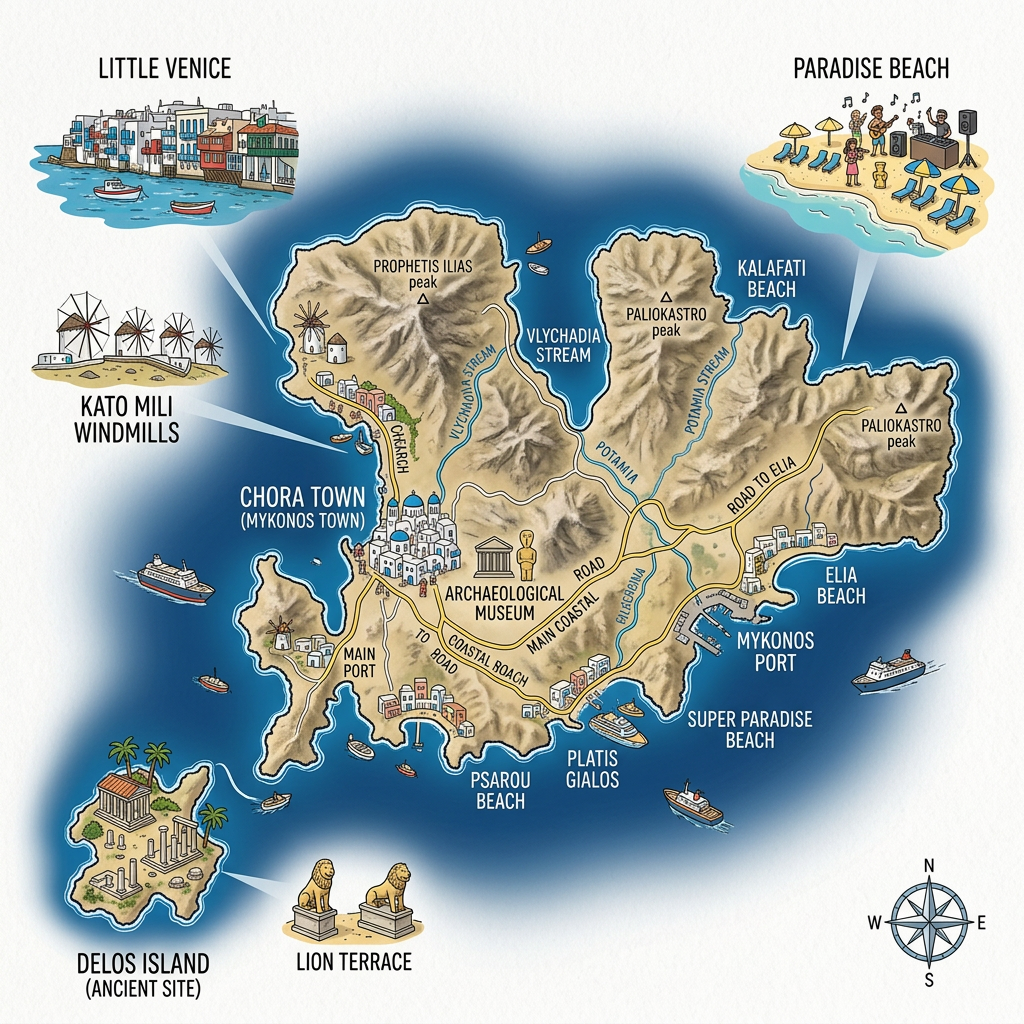
Diving into the unique atmosphere of Mykonos begins well before the stay, often as soon as one glances at a geographical map of this renowned Greek island. Spotting the paradisiacal beaches, visualizing a precise city map for Chora, or identifying in advance the places to visit already gives a taste of the trip. But the possibilities are so varied that good preparation necessarily involves choosing the best tourist map or the plan suited to your desires. Here is a true guide to making the most of each style of map and fully enjoying everything Mykonos has to offer.
Why consult a map of Mykonos before your trip?
Discovering Mykonos through a well-designed map immediately offers a new perspective. The island is not limited to its famous whitewashed houses nor its lively alleys. Its geography is full of tourist sites sometimes forgotten when one does not prepare the itinerary in detail. By consulting different types of maps, you maximize the chances of creating a balanced stay between relaxation and discovery.
Analyzing an appropriate city map also provides an effective alternative to mobile applications which, at times, prove less reliable on secondary roads or in certain villages. Adopting a visual approach helps organize days around the must-see areas or uncover hidden addresses in the countryside.
General geographical maps: understanding the island’s topography
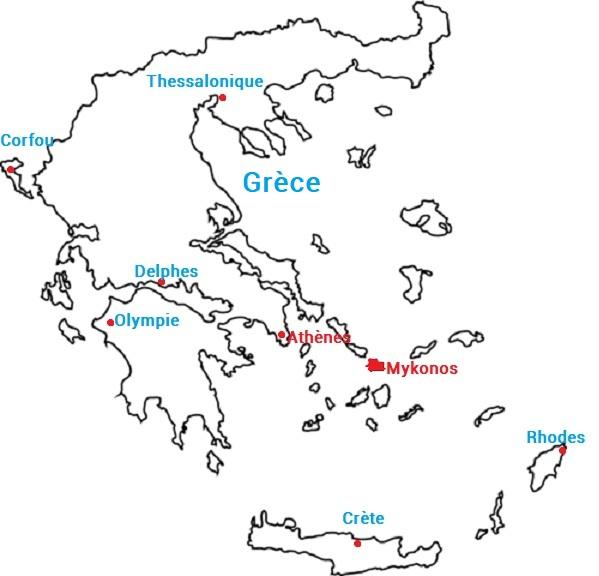
Before diving into practical details, stopping at a geographical map of Mykonos allows you to locate the major regions and their relief. This type of support highlights the elongated shape of the island, its main bays, its rocky capes, and of course its proximity to other gems of the Cyclades.
Analyzing the distance between the airport and the main port, spotting the exact location of villages like Ano Mera or Agios Stefanos, can save a lot of time on the first day on site. Not to mention that some roads require particular precautions depending on the season or the crowd.
City maps and interactive maps: finding your way in Chora and beyond
The capital, Chora, is a true labyrinth of winding alleys designed to protect the town from wind and pirates in the past. Finding your way without a city map quickly means going in circles. Fortunately, several options are available to facilitate your orientation and quickly access the liveliest neighborhoods.
Detailed maps indicate the location of trendy restaurants, hotels, shops, and main meeting points. Each year, the tourist office also publishes a tourist map allowing quick location of emblematic monuments and shopping streets.
Paper or digital maps: what are the differences?
Paper maps remain appreciated by those who like to annotate their discoveries or keep a tangible souvenir of the trip. Conversely, digital maps offer the possibility to activate geolocation and access enriched information in real time. The two formats generally complement each other well depending on the planned activities.
Some visitors even choose to create their own custom map by overlaying tested or recommended addresses. This ensures a unique route, far from the purely classic itineraries offered by most printed guides.
Optimizing your movements through effective map reading
Building your program around a clear map facilitates time management by avoiding unnecessary back-and-forth. Choosing to concentrate a day on the southwest, for example, where Ornos, Platis Gialos, and Paradise Beach are located, guarantees enjoying each beach without losing too much time on the road.
In the center, the presence of multiple dining options often encourages taking gourmet breaks between cultural visits or shopping sessions. A good map then allows adapting the pace of the stay to the moment’s desires, whether it is exploring the port or climbing up to the windmills on the hill.
Themed tourist maps: Exploring according to your interests
The variety of activities available in Mykonos gives rise to a multitude of themed maps, each focused on a particular aspect to discover. This approach appeals equally to enthusiasts of local history, fans of relaxation, or families looking for appropriate leisure.
Here are some of the themes frequently covered in locally published maps:
- Marked routes connecting Byzantine churches or typical chapels
- Updated lists of beaches ranked according to their attendance or level of facilities
- Recommended itineraries for hiking or water sports enthusiasts
- Selections of restaurants offering authentic cuisine
- Inventory of art galleries or festivals organized during the summer
Focus on iconic beaches featured on tourist maps
It is impossible to imagine Mykonos without mentioning its internationally renowned beaches. A worthy tourist map inevitably mentions key shores such as Super Paradise, Elia, or Psarou. Locating these places on the map gives ideas for day trips or just a few hours, depending on the desired level of activity.
This approach also helps anticipate periods when tranquility prevails, or conversely, those during which the festive atmosphere dominates and attracts music lovers and late-night partygoers.
Places to visit and must-see tourist sites
Specialized maps highlight historical sites, such as Little Venice with its colorful balconies, or the Paraportiani church. Locating these must-sees on a map simplifies their inclusion in a walking tour, thus limiting unnecessary detours and sometimes revealing unsuspected viewpoints over the Aegean Sea.
Some maps also publish original suggestions, inviting you to go off the beaten path to approach monasteries or museums less known but equally remarkable for those wishing to deepen their understanding of local life.
Preparing your accommodation and outings with the right map
Booking a hotel or choosing a restaurant in Mykonos involves considering both proximity to beaches, bars, or local transport. Again, having a detailed map informs not only about the exact location of the selected accommodation but also about the nearby amenities.
Finding your way on a precise map helps avoid any unpleasant surprises related to distance, or conversely, to favor a quiet neighborhood away from the nighttime bustle of the city center.
Selecting the ideal Neighborhood thanks to the city map
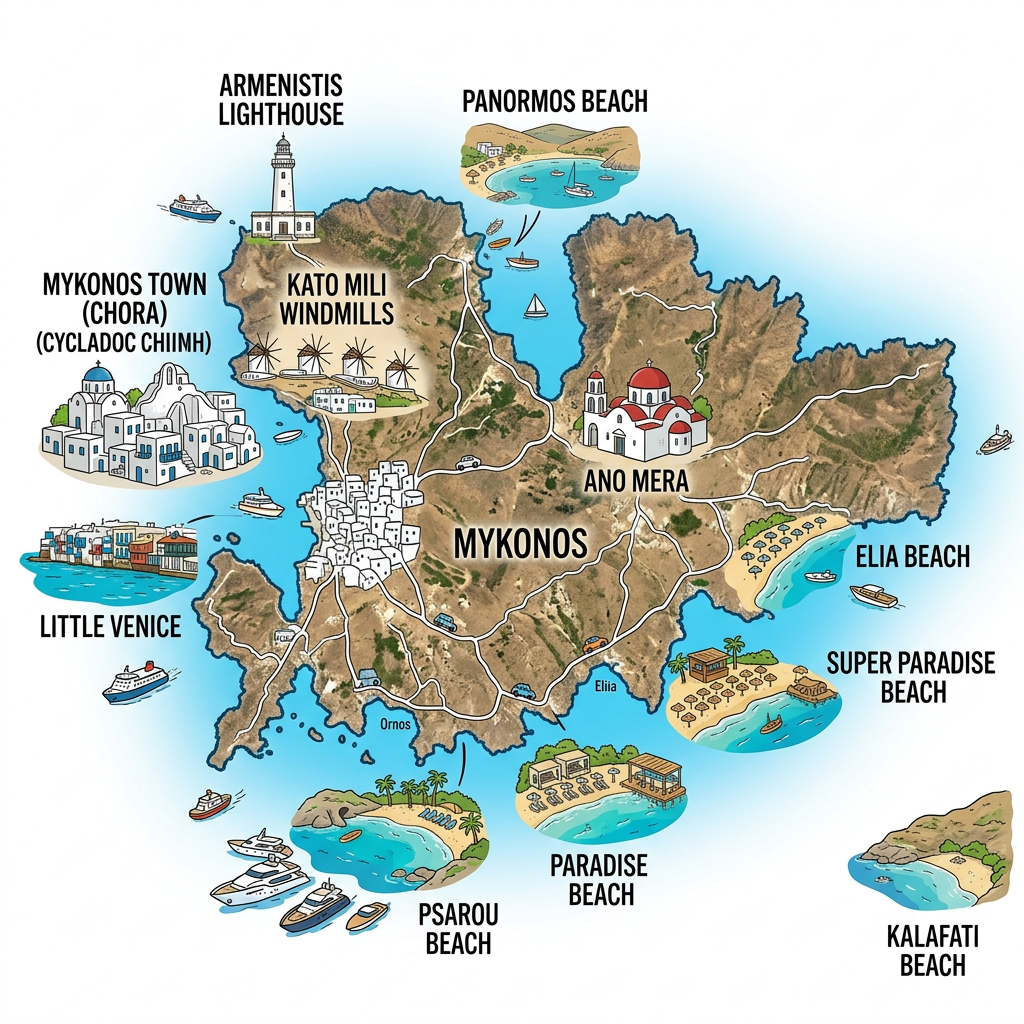
By comparing the different areas listed on the map, it becomes easy to choose between the village simplicity of Ano Mera or the continuous buzz of Tourlos near the port. The north of the island also holds some curiosities, while the southern coast concentrates the majority of tourist infrastructures and leisure facilities.
A map is an asset for solo travelers wishing to move quickly, as much as for families wanting to know the exact distances between the hotel and the child-friendly beach.
Anticipate your culinary and festive outings
Finding the right restaurant addresses can sometimes be a challenge as the selection changes every season. Many Mykonos maps now include a recommended address book, highlighting local products, traditional taverns, and popular contemporary tables.
Adapting your strolls according to gastronomic desires is thus part of the experience, facilitated by a careful reading of the map which points out the perfect spots for an aperitif facing the sea or a tasting at sunset.
Tips for choosing the right map of Mykonos according to your needs
With the variety of options available, how do you select the ideal map to prepare your trip to Mykonos? It will all depend on the traveler’s profile and their specific expectations. A heritage enthusiast will first look for the version richest in cultural points of interest, while a family with children will opt for a map highlighting the safety and accessibility of the beaches.
Don’t hesitate to start with a general map to get your bearings, then complement it with maps dedicated to each central theme of your trip. Some local providers distribute very clear brochures for free, while apps offer an immersive experience directly on your smartphone.
Checklist of elements to look for on a map
To be sure not to forget anything, always check for the presence of the following elements:
- Signage of main and secondary roads
- Identification of bus stops and taxi stands
- Precise location of major tourist sites
- Practical tips such as parking lots or public restrooms
- Measured distances between beaches and key neighborhoods
A well-designed map should also include some local advice tailored to the period of your stay, especially in the heart of summer when attendance rises.
When to pay attention to updated versions?
Every year, the range of services evolves in Mykonos. Some addresses close, others open, and schedules change regularly. Always favor an updated map to avoid finding a beach suddenly privatized or a site temporarily inaccessible.
Older versions should be consulted with caution for planning, but they retain a certain charm for fans of vintage souvenirs or collectors of old maps.
Explore Mykonos differently through cartography
Using a geographical map or a city plan effectively is not just for orientation. It’s also an opportunity to travel differently, with soft mobility (biking, walking) encouraged by the small size of the island and the pleasure of discovery off the traditional routes.
Creating personalized itineraries promotes a serene and authentic exploration, guided by curiosity. Thanks to the variety of cartographic representations offered in Mykonos, everyone can easily find the medium that suits their plans and pace, to savor every corner like a true modern explorer.
FAQ – Mykonos map
Mykonos is a Greek island located in the Cyclades archipelago in the Aegean Sea. It is famous for its beaches, whitewashed houses with blue shutters, windmills, and lively atmosphere.
A map of Mykonos helps visitors locate the main beaches, Chora, the old port, and the iconic windmills. It also makes it easier to find villages, historical sites, and scenic viewpoints across the island.
May to June and September to October offer pleasant weather and fewer crowds. Summer is perfect for enjoying the beaches and nightlife, although it is also the busiest tourist season.
