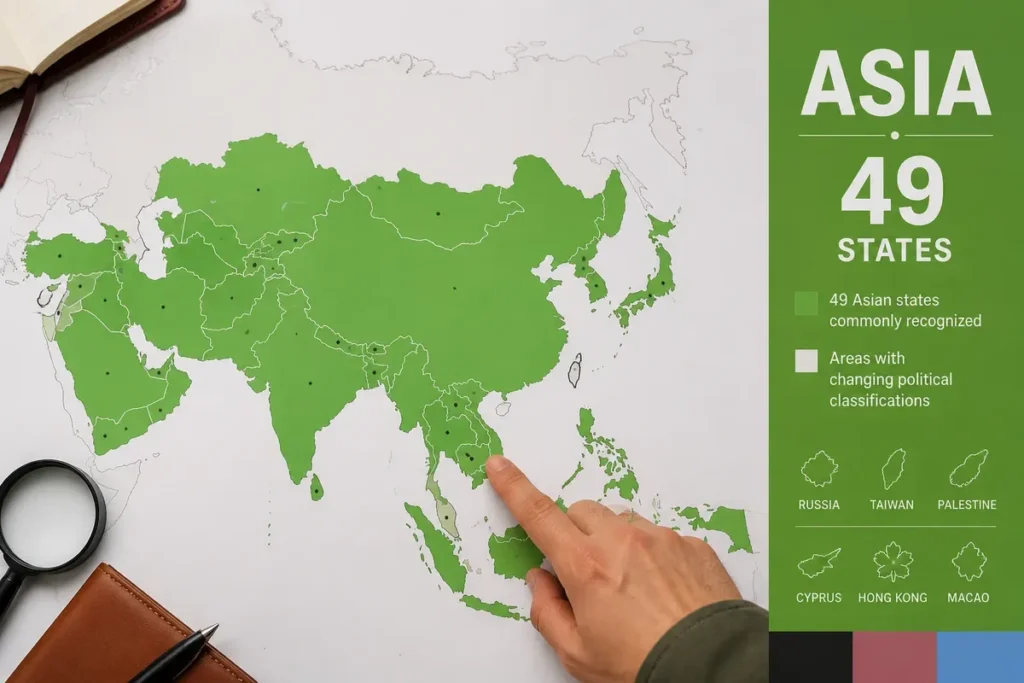
When you start planning a trip to China from home, it’s easy to fall into a little geographical trap. You place Beijing, Xi’an, Chengdu, Zhangjiajie, Guilin, and Shanghai on the same map, and since all these cities appear under the same heading, “China,” it seems logical to visit them all in a single trip.
But the actual scale tells a different story. China has a land area of about 9.6 million square kilometers. You are not organizing trips between relatively close places, but you are traveling across a territory of continental dimensions.

That is why, before asking yourself what you want to visit, it is better to open the map and ask where each place is and how long it will actually take you to get there. Because the challenge is not just deciding which cities deserve a stop, but designing an itinerary where travel time does not end up taking a disproportionate part of the trip.
The question is therefore: how to discover China to appreciate its immense diversity without wasting time moving from one destination to another?
Before choosing stops, look at China on a continental scale
A list of destinations can easily mask the scale of a trip.
Beijing is located in the north of the country. Shanghai is situated on the east coast. Xi’an is inland, Chengdu takes you to the southwest, and Guilin even further south. On a list, these are five names. On a map, these are five points separated by considerable distances.
Beijing and Xi’an, for example, are about 900 kilometers apart as the crow flies. Between Beijing and Shanghai, there are more than 1,000 kilometers. If you then want to continue your journey from Shanghai to Guilin, you add again a considerable distance to the southwest.
This is where it is useful to stop thinking in terms of individual attractions and start thinking in terms of regions.
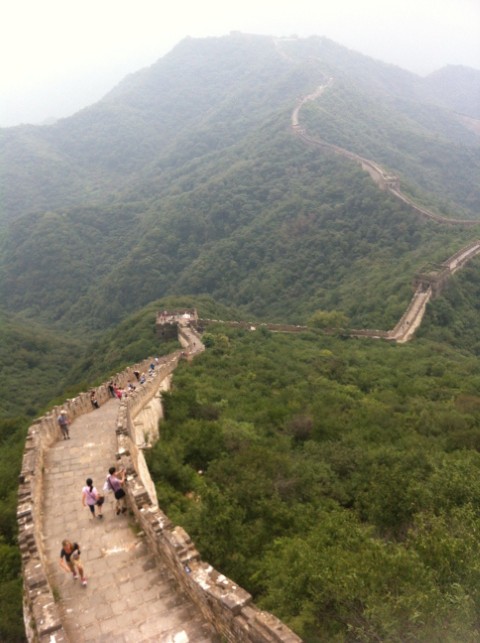
If you visit Beijing, you can dedicate part of your stay to the city itself and reserve another day to discover the Great Wall. From Shanghai, you can consider excursions to relatively nearby cities like Suzhou or Hangzhou. Xi’an allows several days to be devoted to its historical heritage and nearby tourist sites. Guilin can form a natural set with Yangshuo, while Chengdu can serve as a starting point to explore other sites in Sichuan.
Grouping experiences this way avoids traveling long distances just to add another famous name to the itinerary. It also reduces back-and-forth travel: going to a region, then practically retracing your steps before moving on to the next.
Train or plane? Distance alone is not enough to decide
There is no one-size-fits-all answer for every trip.
China has a vast, high-quality high-speed rail network. The train is therefore particularly convenient on routes where connections are fast and frequent. The journey between Beijing and Shanghai is a good example: although these two cities are very far apart, the train allows you to cover this distance in about four and a half hours.

But simply comparing “four and a half hours by train” to “two hours by plane” can lead you to a wrong conclusion.
What really matters is the door-to-door time.
To take a plane, you have to get to the airport, arrive well in advance, go through security checks, board, and upon landing, get from the new airport to the city. An air journey, apparently much faster, can lose some of this advantage when all these steps are added up.
The train follows its own logic. Stations can certainly be huge and far from your accommodation, but you generally don’t need to repeat all the steps of air travel. Moreover, getting off the train in a well-served neighborhood of the city can make the rest of your trip easier.
Before booking, find out about the actual connection and don’t rely solely on the number of kilometers. For example, the official China Railway platform, 12306, allows you to check available rail connections and their schedules.
Ten days, two weeks or three weeks: the pace completely changes the itinerary
If you have about ten days, choosing two or three main bases generally offers a much better balance than trying to cross several regions. An itinerary like Beijing → Xi’an → Shanghai already allows you to discover three very different environments without having to change accommodation almost every night.
Two weeks open up other possibilities. You could, for example, consider an itinerary such as Beijing → Xi’an → Chengdu → Shanghai. This is not necessarily the itinerary you need, but it helps to understand how a few extra days allow you to include another geographic area without turning each stop into a whirlwind visit.
With three weeks or more, chaining several regions becomes much more feasible. Even then, adding destinations indefinitely does not necessarily improve the trip.
Because transfer days are not limited to the hours indicated on the ticket.
You have to pack your suitcase, leave the hotel, get to the station, find the right platform, travel, arrive in an unknown city, locate the next accommodation, and settle in. If you repeat this process every two days, a considerable part of your vacation ends up being devoted to logistics.
That’s why a two-week trip with four well-chosen stops can offer you a much fuller experience than another including seven cities spread across the country.
A good itinerary always leaves room for the unexpected
On a spreadsheet, an itinerary can be precise to the minute. In reality, this is rarely the case.
You might take longer than expected to find your way around a station, a schedule might be changed, it might rain during a day you had reserved for an excursion, or you might simply arrive tired after several days of travel.
Allowing some margin between major trips lets you deal with these unforeseen events without disrupting everything that follows.
During a multi-stage trip, part of the logistics is actually settled as you go along. You will need to check schedules, locate stations, consult routes, access your bookings, or use translation tools. It is in this context that connectivity stops being an isolated detail to become an integral part of the practical preparation of the itinerary.
If you prefer to settle this issue before leaving, among the alternatives you can compare is the eSIM Option for China from Holafly. The important thing is to choose a solution adapted to the duration and characteristics of your journey, especially if you plan to change cities several times and will depend on your phone to manage these transfers.
Having maps, bookings, and transport information can give you some leeway to react in case of changes. But these tools should help you travel more flexibly, not encourage you to further condense your itinerary.
In China, traveling less far can allow you to discover more
In a country of this size, traveling fewer kilometers can mean discovering much more.
Grouping your destinations well and allowing time between trips lets you dedicate your journey to the places themselves, not just the route that connects them. So, before adding another point on the map, ask yourself another question: Do I really want to go there or am I just having trouble excluding it?
China will remain immense on your next trip. No need to try to cover everything on the first one.