
What you need to know about the Gard department ?
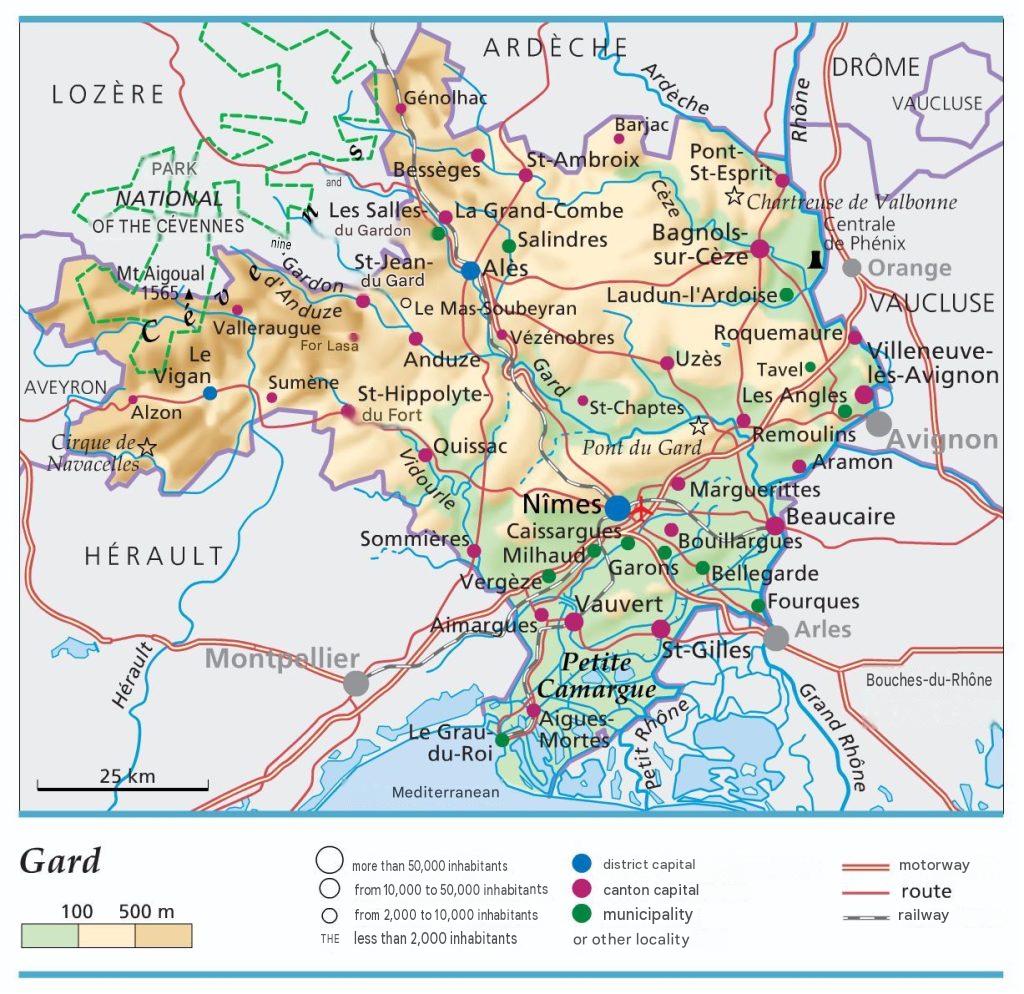
Indeed, French department 30, named Gard, is a department located in the southern part of the country. It belongs to the Occitanie region. Currently, its population amounts to 765,476 inhabitants, and its area covers 5,853 km².
This makes Gard the 32nd most populous department in France. The name Gard comes from the name of a river that crosses the department. There is also an important mountain in the Gard department called Mont Aigoual; it is the highest point of the department, reaching an altitude of 1,565 metres.

Currently, its capital and prefecture is called Nîmes, and its sub-prefectures are Alès and Le Vigan. This department is divided into several zones including 3 arrondissements, 23 cantons, and 351 communes.
What are the neighboring departments of the Gard department?
First, since the Gard department is part of the Occitanie region, its neighboring departments are Lozère, Hérault, Aveyron, Vaucluse, the Bouches-du-Rhône, and finally Ardèche.
What is the climate like in the Gard department?
Overall, the climate of Gard is considered to be Mediterranean. The precipitation in this department amounts to about 600 to 800 mm annually, and there are 3 climatic variations depending on the geographical location:
First, there is the southern part: this area extends from the coastal zones to the Costières. There, winters are quite mild and summers are dry with precipitation not exceeding 500 to 600 mm annually.
Next, there is the central and eastern section of the department: in this zone, the climate is characterized by mild winters and sunny summers, although some stormy precipitation can occur. During the autumn and spring seasons, there are significant rains, which is the case in Nîmes, Bagnols-sur-Cèze, and Alès.
In the northwest zone, there is a Mediterranean-type climate strongly influenced by the oceanic climate. That means precipitation is high here, reaching up to 1000 mm annually. However, winters are mild, and in the slightly elevated areas, there is significant snowfall, especially on Mont Aigoual. In this zone, spring and autumn may be influenced by severe precipitation that could cause flooding. Conversely, summer periods may experience strong and frequent thunderstorms.
In the section facing the Mediterranean part, there is first a Mediterranean-type climate. However, in the section facing the Atlantic, the climate is similar to what can be found in Aveyron, that is, a mountain oceanic climate.
What are the best cities in the Gard department?
To make this ranking, we categorized the cities that are the best in terms of tourist visits:
- Uzès
- Nîmes
- Alès
- Bagnols-sur-Cèze
- Saint-Gilles
- Les Angles
- Aigues-Mortes
- Vauvert
- Pont-Saint-Esprit
- Puechredon
What are the most important communes in the Gard department?
Here are the most important municipalities in the Gard department ranked by largest area in terms of surface:
- Nîmes
- Vauvert
- Beaucaire
- Lanuéjols
- Aigues-Mortes
- Saint-Gilles
- Saint-Laurent-d’Aigouze
- Val-d’Aigoual
- Dourbies
- Le Grau-du-Roi
We have ranked these municipalities of Gard from most populated to least populated, that is, according to the population density per km2:
- Brest
- Concarneau
- Douarnenez
- Guipavas
- Plouzané
- Quimper
- Morlaix
- Landerneau
- Plougastel-Daoulas
- Quimperlé
FAQ – Gard map
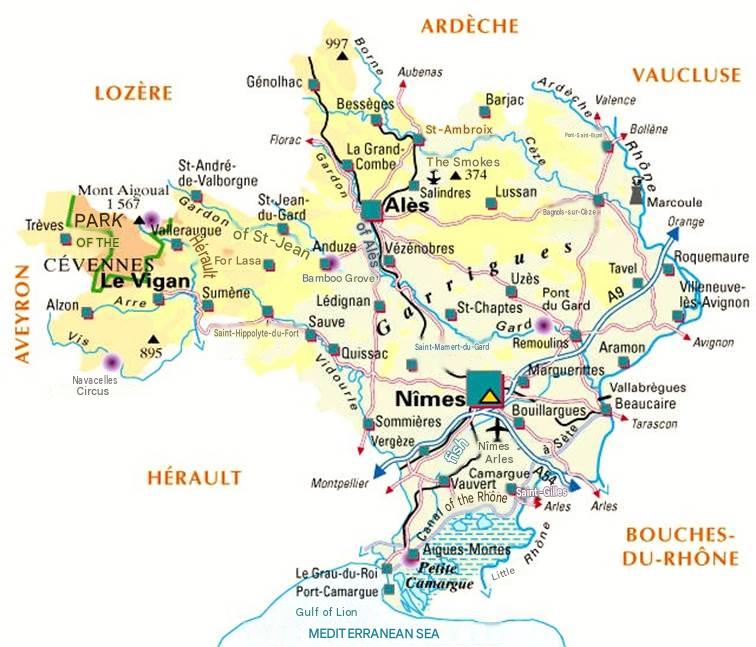
A map of Gard helps you locate the main towns, roads, waterways, and natural areas of the department. It also provides a better understanding of its geographical organization and different territories.
A map helps you plan an itinerary by identifying municipalities, tourist sites, and transportation routes. It also makes it easier to organize your travels and fully enjoy the discoveries of the department.
Yes, it makes it easier to locate monuments, natural landscapes, and must-see cultural sites. It is also a practical resource for exploring villages, mountains, and rural areas of Gard.
