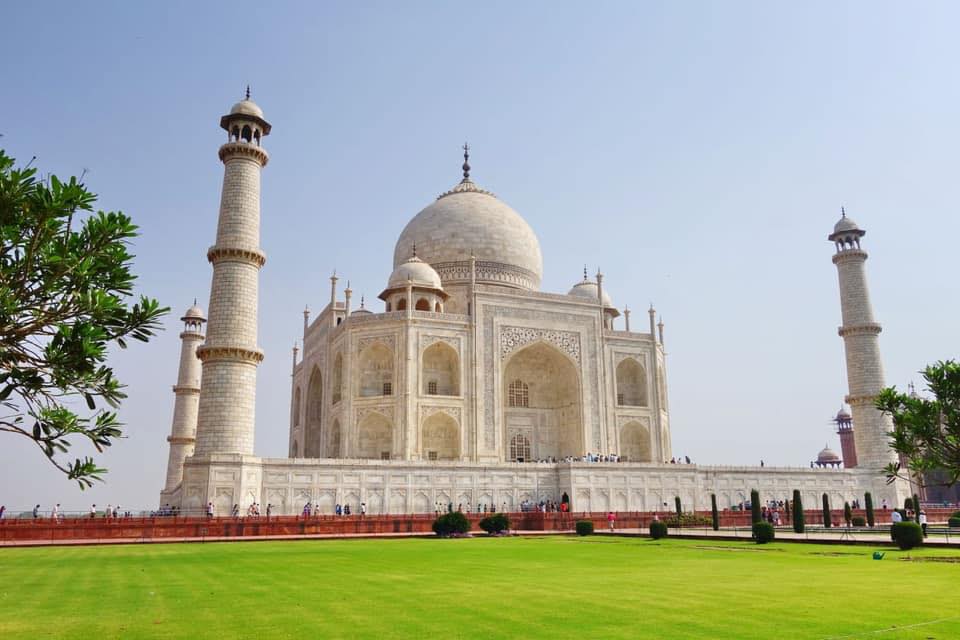
The Taj Mahal is much more than just a building. This famous mausoleum overlooks the city of Agra, in India, since the 17th century. Admired for its elegant appearance and sophisticated lines, it embodies a strong emotional and architectural charge. Even today, this iconic monument attracts millions of visitors who come to admire its unique beauty. Through its walls, the Taj Mahal tells a fascinating chapter of history while remaining the universal symbol of eternal love.
My humble point of view:
In my opinion, the Taj Mahal is one of the few monuments in the world that manages to surpass its own legend once you stand before it. I am fascinated by the duality of the marble which seems to change texture depending on the light, shifting from a virginal white to a powdery pink at dawn. My feeling is that its geometric perfection is not cold, but carries a tangible emotion: to me, it is this alliance between mathematical rigor and overwhelming sentimentality that makes it an absolute masterpiece of humanity.
The historical origins of the Taj Mahal
The history of the Taj Mahal begins in 1631, when the Mughal emperor Shah Jahan decided to honor the memory of his favorite wife, Mumtaz Mahal. The construction of the mausoleum lasted nearly twenty years, involving thousands of Indian and foreign artisans. Quickly becoming a reference in the Indian heritage, this jewel continues to inspire admiration and respect among art lovers and historians.
From its erection in Agra, the monument is surrounded by an almost sacred atmosphere. The meticulous details and the grandeur of the site remind us how human loss could inspire an immortal work. This ambitious project symbolizes not only the pain of mourning but also the creative power resulting from sincere passion.
To calmly prepare your grand departure to the wonders of Uttar Pradesh, it is essential to know how to properly prepare your trip abroad in order to anticipate administrative formalities. If you wish to keep an elegant record of your Indian itinerary, installing a world map wall decoration in your office will extend the exoticism of your stay. Finally, for those who enjoy intellectual challenges related to geography, a world map puzzle is an excellent way to recall the location of major world monuments while having fun.
An inspiring architecture between tradition and innovation

The architecture of the Taj Mahal holds a special place in the world. Representing the pinnacle of Indo-Islamic art, it subtly combines refined geometric patterns, floral decorative elements, and Quranic calligraphy. The contrast between the dazzling whiteness of the white marble and the inlays of precious stones enhances this spectacular effect, particularly striking at sunrise or sunset.
Any visitor noticing the perfect symmetry of the gardens or the balance of each facade understands how much every detail was designed to impress. The harmonious arrangement illustrates both the technical rigor and the aesthetic will of the builders of the time. The immense central dome naturally draws the eye while the slender minarets proudly mark the horizon of Agra.
| Key Data | Information to Remember |
| Location | Agra, Uttar Pradesh State, India |
| Construction | Between 1631 and 1648 by Emperor Shah Jahan |
| Main Material | Translucent white marble from Rajasthan |
| Architectural Style | Mughal art (blend of Persian, Islamic, and Indian influences) |
| Special Status | One of the seven new wonders of the world |
Noble Materials and Craftsmanship
If the white marble fascinates so much, it is because its texture and color change with the daylight. Artisans worked for years to select, cut, and assemble these stone slabs coming from different regions of India. Colored inlays form unique arabesques found on all surfaces of the mausoleum.
The use of rare materials demonstrates the importance given to the project from its inception. Besides marble, one notices the presence of imported semi-precious stones such as jasper, turquoise, and agate. Each brings a unique shade to the whole, thus enhancing the sumptuous character of the iconic monument of Agra.
Influences of Indo-Islamic Art
The Taj Mahal condenses multiple influences stemming from both Persian traditions and regional styles of India. The combination of domes, pointed arches, and floral decorations testifies to a unique cultural fusion. This originality makes the site a refined example of Indo-Islamic art, appreciated by experts and the general public alike.
The fineness of the details, combined with the robustness of the building, gives the structure a poetic dimension. The inscriptions engraved on some facades tell verses taken from the Quran, enriching the religious and artistic significance of the mausoleum. The result is a delicate balance between subtle ornamentation and monumental strength.
Why Does the Taj Mahal Fascinate So Much?
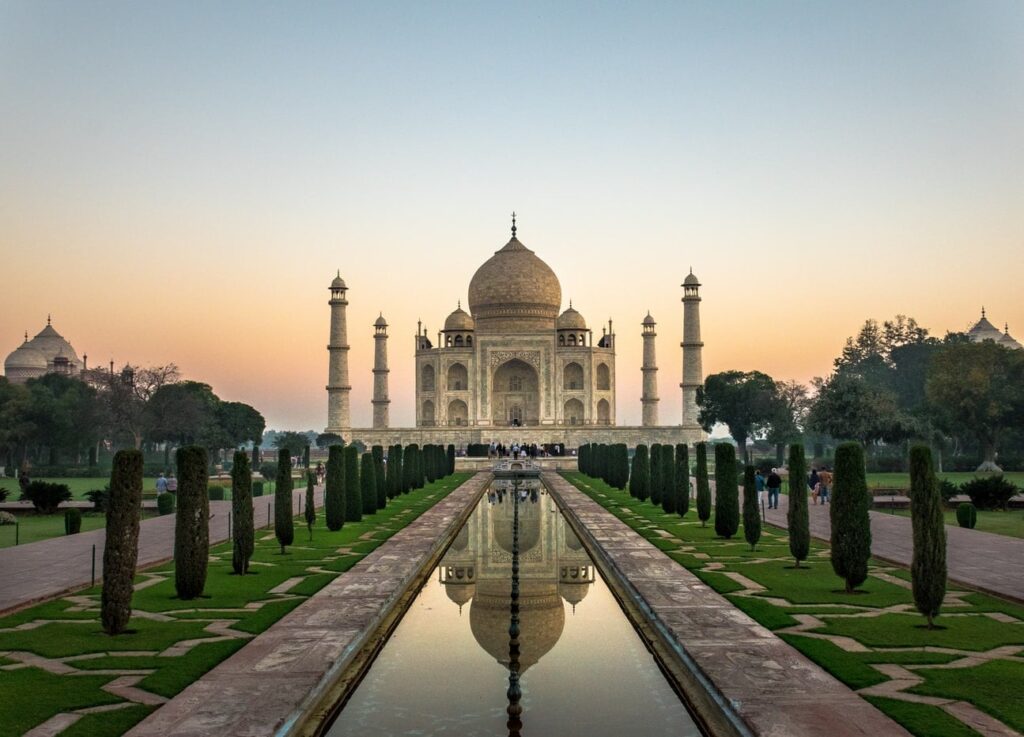
The charm of the Taj Mahal does not lie solely in its exceptional architectural qualities. This mausoleum inspires through the depth of its history and the romantic legend surrounding its creation. Many make the journey to Agra to feel this intense atmosphere where visual beauty, solemn silence, and strong emotions blend.
Walking along the flowered paths of the gardens or observing the reflections of the white marble in the main pool, each visitor perceives the uniqueness of the place. Some evoke a feeling of peace, others a sense of reverence before this symbol of love passed down through the centuries. The experience remains unforgettable for all types of travelers.
- Admiration for the timeless elegance of the mausoleum
- Close connection with the history of India and the Mughal dynasty
- Exploration of the refinement of Indo-Islamic art
- Sensitivity to the messages of love and fidelity embodied by the monument
- Awe at the technical feat of the era
I remember getting very close to the walls to observe the inlays of semi-precious stones in the marble. Touching these flowers of mother-of-pearl and lapis lazuli with my fingertips, I had a sudden awareness of the scale of time: thousands of artisans devoted their lives to these details that we now glance over in a few seconds for a selfie. This reflection made me understand that the true splendor of the Taj Mahal lies in the invisible, in those millions of hours of accumulated manual labor. This moment of contemplation taught me to slow down my pace of visit to honor the sacrifice of those who built this dream of stone.
The cultural and tourist impact of Agra’s iconic monument
Ranked among the wonders of the modern world, the Taj Mahal has become an essential landmark on the global tourism map. The inhabitants of Agra benefit from this international prominence which boosts the local economy. Numerous festivals, shows, or themed exhibitions revolve each year around the mausoleum.
A great source of inspiration for artists and writers, this iconic monument fuels many stories, paintings, and photographs. Its image today embodies the cultural identity of India, while inviting discovery and tolerance. The influence of the Taj Mahal thus goes beyond simple geographical borders.
Preservation and contemporary challenges
The increase in visitors poses new challenges related to the preservation of the white marble structure. Climate change, air pollution, and fluctuations in tourist numbers force authorities to strengthen conservation measures. These efforts reflect the desire to maintain the mausoleum’s brilliance for future generations.
Regular restoration campaigns help safeguard fragile elements and preserve the site’s original splendor. Specialists are also exploring innovative solutions to limit human impact without restricting public access to this world-renowned symbol of love.
The Taj Mahal in the collective imagination
Over time, the mausoleum of Agra has inspired many legends and artistic representations. Its image appears on various cultural media, ranging from stamps to films, not to mention novels and specialized works. For many, it remains the quintessence of a romantic and majestic place, a reflection of a glorious past still alive.
In popular stories, the Taj Mahal holds a privileged place. Its immediate silhouette becomes synonymous with dream, monumental achievement, and architectural ingenuity. It conveys a strong message, that of an immortalized love in the most sublime form possible.
All about the Taj Mahal: masterpiece of white marble and symbol of love in India
The public has access to the main hall which houses the cenotaphs of Emperor Shah Jahan and his wife Mumtaz Mahal. These tombs are richly decorated with floral patterns in hard stones, although the actual graves are located in a sealed crypt on the lower floor, not accessible to visitors.
It is highly recommended to arrive right at opening time, usually at sunrise. Not only is the temperature milder, but the morning light offers magical reflections on the marble and the gardens are still relatively quiet before the arrival of large tourist groups.
The Taj Mahal is closed to visitors every Friday. On that day, the complex is only accessible to worshippers who go to the mosque located inside the grounds for prayer. It is therefore essential to plan your itinerary taking this weekly closure into account.