.synthesis h2, .synthesis .synthesis-header { font-size: 1.15em; font-weight: 700; margin-bottom: 0.6em; color: #47752c; }
.synthesis p, .synthesis li { font-size: 1em; line-height: 1.65; margin: 10px; }
.synthesis strong { color: #121e0b; }
.synthesis table { width: 100%; border-collapse: collapse; }
.synthesis th { background: rgba(91, 150, 56, 0.12); color: #47752c; text-align: left; }
.synthesis td, .synthesis th { padding: 8px 12px; border-bottom: 1px solid rgba(91, 150, 56, 0.18); vertical-align: top; }
.synthesis tbody tr:nth-child(even) { background: rgba(91, 150, 56, 0.05); }
.key-takeaways { max-width: 640px; margin: 2em auto; padding: 1.5em 1.8em; color: #1f3313; font-family: “Inter”, “Segoe UI”, sans-serif; text-align: left; position: relative; box-sizing: border-box; background: #f2f7ef; border: 1px solid #5b9638; border-left: 6px solid #5b9638; border-radius: 12px; box-shadow: 0 8px 24px rgba(251, 191, 36, 0.15); }
.key-takeaways h2, .key-takeaways .key-takeaways-header { font-size: 1.15em; font-weight: 700; margin-bottom: 0.6em; color: #47752c; }
.key-takeaways p, .key-takeaways li { font-size: 1em; line-height: 1.65; margin: 10px; }
.key-takeaways strong { color: #121e0b; }
.key-takeaways ul { list-style: none; padding-left: 0; }
.key-takeaways li { margin: 0.45em 0; padding-left: 0.2em; }
.mg-callout{margin:1.5em 0;padding:.9em 1.1em;border:1px solid;border-left-width:4px;border-radius:10px;font-size:.97em;line-height:1.65}.mg-callout>:first-child{margin-top:0}.mg-callout>:last-child{margin-bottom:0}.mg-callout__label{display:block;margin:0 0 .35em;font-weight:700;font-size:.82em;letter-spacing:.03em;text-transform:uppercase}.mg-callout__label::before{margin-right:.45em;font-size:1.05em;vertical-align:-.06em}.mg-callout–info{background:#eff6ff;border-color:#bfdbfe;color:#1e3a5f}.mg-callout–info .mg-callout__label{color:#2563eb}.mg-callout–info .mg-callout__label::before{content:”\2139\FE0F”}.mg-callout–tip{background:#f0fdf4;border-color:#bbf7d0;color:#14532d}.mg-callout–tip .mg-callout__label{color:#15803d}.mg-callout–tip .mg-callout__label::before{content:”\1F4A1″}.mg-callout–warning{background:#fffbeb;border-color:#fde68a;color:#7a4a10}.mg-callout–warning .mg-callout__label{color:#b45309}.mg-callout–warning .mg-callout__label::before{content:”\26A0\FE0F”}.mg-callout–danger{background:#fef2f2;border-color:#fecaca;color:#7f1d1d}.mg-callout–danger .mg-callout__label{color:#dc2626}.mg-callout–danger .mg-callout__label::before{content:”\1F6D1″}.mg-proscons{display:grid;grid-template-columns:1fr 1fr;gap:16px;margin:1.5em 0}@media(max-width:560px){.mg-proscons{grid-template-columns:1fr}}.mg-proscons__col{padding:.9em 1.1em;border:1px solid;border-radius:10px}.mg-proscons__title{display:flex;align-items:center;gap:.4em;margin:0 0 .5em;font-weight:700;font-size:.9em;letter-spacing:.02em}.mg-proscons__col ul{margin:.3em 0 0;padding-left:1.15em}.mg-proscons__col li{margin:.3em 0;line-height:1.55}.mg-proscons__col–pro{background:#f0fdf4;border-color:#bbf7d0;color:#14532d}.mg-proscons__col–pro .mg-proscons__title{color:#15803d}.mg-proscons__col–pro .mg-proscons__title::before{content:”\2705″}.mg-proscons__col–con{background:#fef2f2;border-color:#fecaca;color:#7f1d1d}.mg-proscons__col–con .mg-proscons__title{color:#dc2626}.mg-proscons__col–con .mg-proscons__title::before{content:”\274C”}ol.mg-steps{list-style:none!important;counter-reset:mgstep;margin:1.6em 0;padding-left:0!important}ol.mg-steps>li.mg-steps__item{counter-increment:mgstep;list-style:none!important;padding-left:0!important;padding-bottom:1.4em}ol.mg-steps>li.mg-steps__item:last-child{padding-bottom:0}ol.mg-steps>li.mg-steps__item>:last-child{margin-bottom:0}ol.mg-steps>li.mg-steps__item>.mg-steps__title{margin:0 0 .25em;font-weight:600}ol.mg-steps>li.mg-steps__item>.mg-steps__title::before{content:counter(mgstep) “. “;opacity:.45;font-weight:500;font-variant-numeric:tabular-nums}ol.mg-steps>li.mg-steps__item:not(:has(.mg-steps__title))::before{content:counter(mgstep) “. “;opacity:.45;font-weight:500;font-variant-numeric:tabular-nums}.mg-kpis{display:grid;grid-template-columns:repeat(auto-fit,minmax(140px,1fr));gap:14px;margin:1.5em 0}.mg-kpi{padding:1em .9em;border:1px solid #e5e7eb;border-radius:12px;background:#f9fafb;text-align:center}.mg-kpi__value{display:block;font-size:1.7em;font-weight:800;line-height:1.15;color:#111827}.mg-kpi__label{display:block;margin-top:.35em;font-size:.85em;color:#6b7280;line-height:1.35}
.wp-block-image,.ai-image{margin-bottom:1.75em}.wp-block-image>figcaption,.ai-image>figcaption{margin-top:.5em}
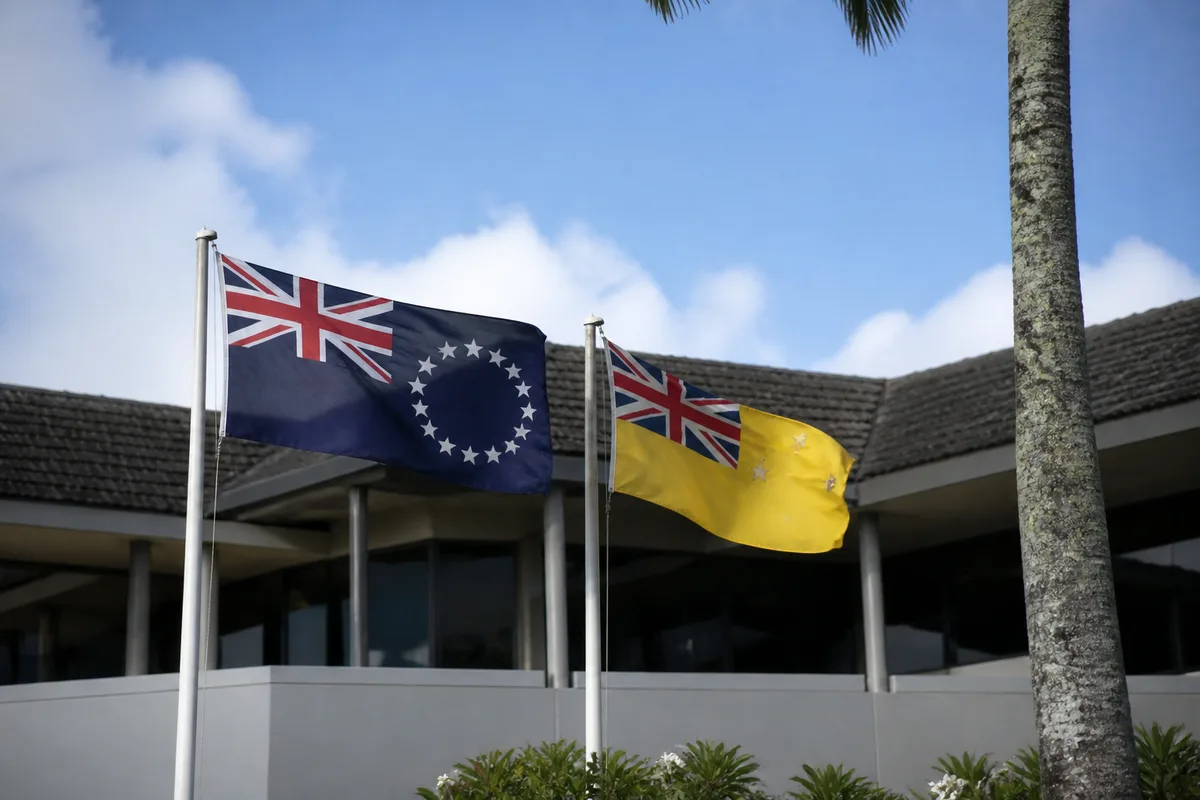
195 is the most commonly used reference number for the official number of countries in the world. It includes 193 member states of the United Nations and two non-member observer states: the Holy See and the State of Palestine. The figure 197 corresponds to an expanded scope that notably adds the Cook Islands and Niue.
📋 The key takeaway: Personally, I consider the figure of 195 countries to have become the absolute reference because it is based on the official recognition of the United Nations. I often explain that this total results from adding the member states and the permanent observers. It is the most reliable diplomatic standard.
The difficulty comes from the word “country.” Depending on whether one counts states, territories, associated entities, or statistical zones, the total changes. A list can therefore show 195, 197, 249, or more without referring exactly to the same categories.
| 📌 | Reference count: 195 political entities usually counted |
|---|---|
| 🏛️ | Member states: 193 UN member seats |
| 🕊️ | Observer states: the Holy See and the State of Palestine |
| 🗺️ | Expanded count: 197 with the Cook Islands and Niue in some lists |
| 📊 | Statistical nomenclature: 249 countries or zones in some international rankings |
| ⚠️ | Warning point: a disputed territory or entity is not automatically a state |
What does the official number of 195 countries cover?
The number 195 refers to a political reference count built around the UN. It adds the 193 member states and the two non-member observer states, according to a convention widely used in educational documents, general statistics, and atlases.


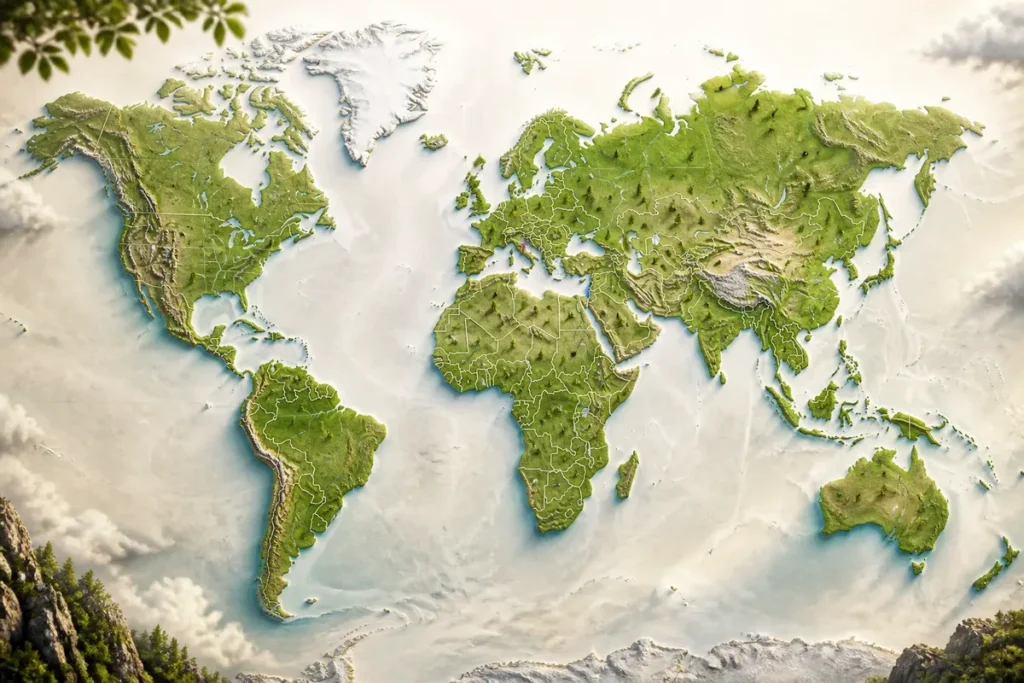
The number 195 is a counting convention, not a unique global list imposed on all administrations. However, the UN provides the most stable framework to count the States represented as members, to which the two permanent non-member observers are added.
The word “official” therefore deserves clarification. Here it means “reference count based on the UN system.” It does not mean that a global authority has published a general decision titled “the world has exactly 195 countries.”
To quickly distinguish the categories, remember this reading:
- 193 Member States: they participate in the UN as members.
- The Holy See: it holds the status of a non-member observer State.
- The State of Palestine: it also holds this status with the UN.
- Territories: they may be administered by a State without constituting a sovereign member State.
This distinction avoids a common mistake: adding all the names present in a geographic database, then calling the result “official number of countries” without specifying the method.
How are the 193 Member States counted?
The 193 Member States correspond to countries admitted to the United Nations. Admission requires a recommendation from the Security Council, then a decision by the General Assembly taken by a two-thirds majority, after reviewing the application.
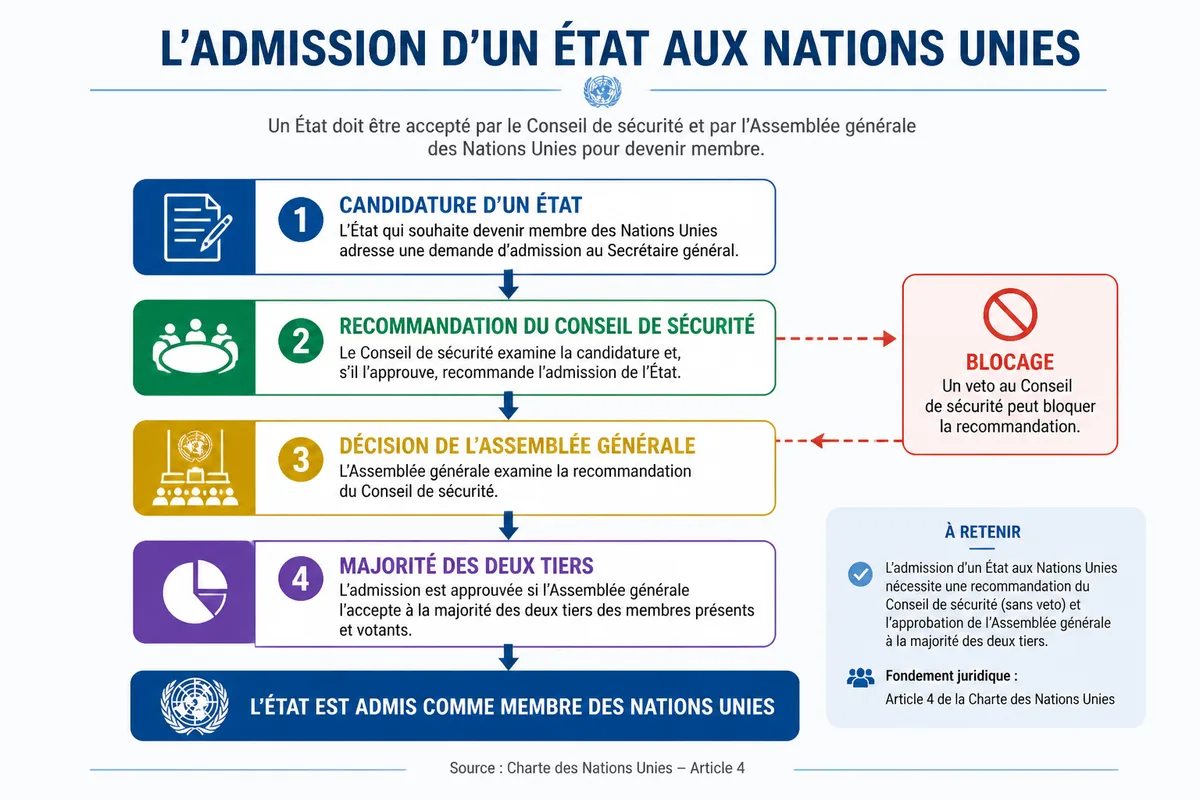
The Security Council acts before the General Assembly.
The United Nations Charter requires that a candidate be presented as a peaceful State, that it accepts the obligations of the Charter, and that it is capable of fulfilling them. The procedure therefore has both a legal and a political dimension.
A veto in the Security Council can block the recommendation. Without this recommendation, the General Assembly cannot finalize the admission. This sequence explains why diplomatic recognition, institutional capacity, and international power relations weigh on the count.
The two-thirds majority concerns the decision of the General Assembly on an important issue. The vote does not automatically transform any entity claiming sovereignty into a member of the UN.
A member state can also maintain incomplete diplomatic relations with other states. Membership in the UN remains a classification criterion, not proof that all territorial or political issues are definitively resolved.
For the reader, the useful gesture is simple: when a table announces “UN member countries,” it describes a narrower category than the total of 195.
Why do the Holy See and the State of Palestine complete the total?
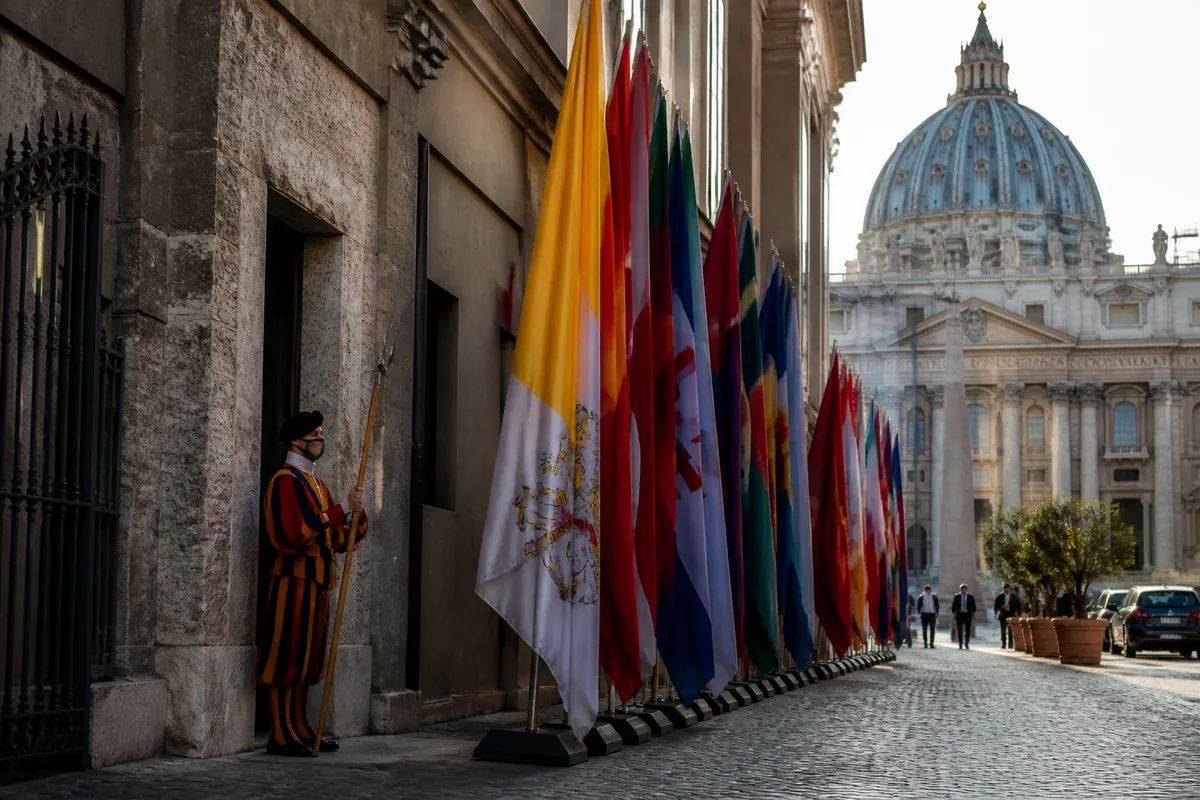
The Holy See and the State of Palestine are counted in the total of 195 because they have the status of non-member observer states at the UN. They can participate in certain works and debates, without having the same institutional status as the 193 members.

The Holy See represents the sovereign authority linked to the Vatican City in international relations. The two notions are close in common usage, but they do not designate exactly the same institutional reality.
The State of Palestine also has the status of a non-member observer state. This category allows it to take part in the work of the UN without occupying a member seat endowed with voting rights identical to those of the 193 member states in the General Assembly.

The calculation is therefore arithmetic: 193 members plus two observers. This addition does not transform observers into members and does not automatically grant them the same voting rights.
🧭 My experience: By analyzing geopolitical sources on May 14, 2025, I often noticed confusion between dependent territories and sovereign states. This investigation allowed me to structure clear explanations to decode official lists.
The phrase “195 countries recognized by the UN” is convenient but imprecise. The UN mainly recognizes statuses and institutional relationships; it does not publish a single worldwide definition of the word country applicable to all lists.

Why do some counts state 197 or 330 countries?
Totals above 195 expand the scope. The figure 197 generally adds the Cook Islands and Niue, while 330 corresponds to a classification of destinations or entities used by a specialized organization, and not to the number of UN member and observer states.
For further insight, I recommend this cartographic exploration which complements this topic well. This list of countries also offers interesting perspectives. And to go further, this travel guide provides useful insights.


197 is not the official UN count number. It is an expanded total that treats the Cook Islands and Niue as distinct entities in the list used.
💡 Did you know? Countries internationally recognized like Switzerland only joined the UN late (in 2002), proving that sovereign country status precedes official membership.
Their international situation is particular. They are freely associated with New Zealand and have their own external capacity to act in several areas, which explains their presence in certain lists of countries or destinations.
Entities with limited recognition add another difficulty. Taiwan, Kosovo, or the Sahrawi Arab Democratic Republic can be presented as states in some contexts, while their status is not uniformly accepted by governments and international organizations.

Diplomatic recognition, effective control of a territory, and UN membership are three different criteria. They can overlap without producing exactly the same list.
⚠️ Classic trap: Believing that the nations participating in sporting competitions (such as the Olympic Games or the FIFA World Cup) faithfully represent the number of UN countries. They often include constituent nations or overseas territories.
An international statistical nomenclature counts 249 entries when it includes countries, territories, and areas necessary for data exchanges. This total is used to code an address or a geographic area, not to measure the number of sovereign states.
The classification of 330 destinations follows an even broader logic. It may include territories separated for travelers, islands, or regions with their own geographic identity. Therefore, it does not replace the total of 195.
The details of the categories are developed in this article on the 195, 197 or 330 countries, which allows comparing the scopes without adding them together.
Geographical distribution of the 195 countries
⏱️ Practical advice: For your exams, articles, or maps, always prioritize the reference of the 195 UN countries to avoid any diplomatic or statistical dispute.
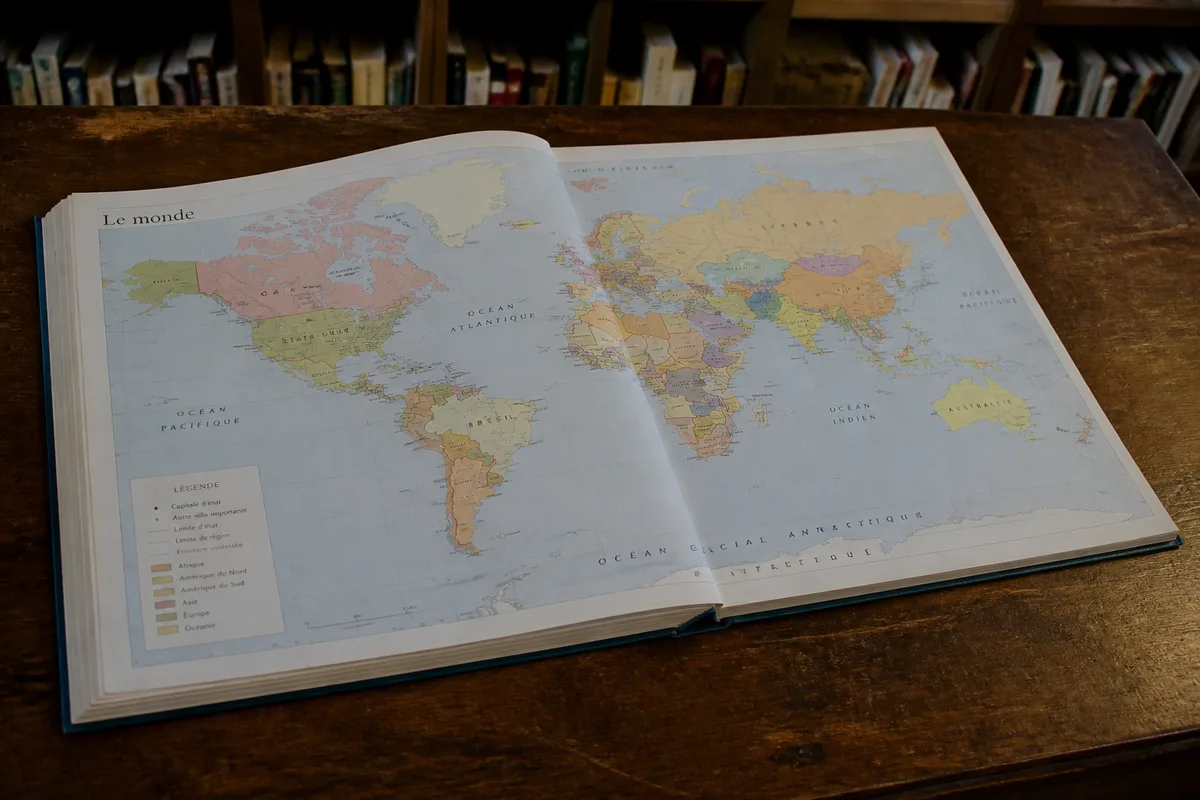
The distribution of the 195 countries by region depends on the chosen geographic nomenclature. The figures often cited are 54 in Africa, 48 in Asia, 44 in Europe, 33 in Latin America and the Caribbean, 14 in Oceania, and 2 in North America according to this breakdown.
| Region | Commonly cited number | Reading limit |
|---|---|---|
| Africa | 54 | The regional scope must be kept consistent from one source to another. |
| Asia | 48 | Transcontinental countries can be classified differently. |
| Europe | 44 | The geographic boundary of Europe is not identical to a political boundary. |
| Latin America and the Caribbean | 33 | The breakdown includes or excludes certain areas depending on the nomenclature. |
| Oceania | 14 | Island states are distinguished from dependent territories. |
| North America | 2 | This figure belongs to the same breakdown as the 33 from the previous line. |
These numbers do not always form a simple addition if the source uses a different definition of regions. A transcontinental country may be classified in Europe or Asia, while Central America may be included in North America or Latin America.
However, geography does not decide the status of a state. It organizes data after the choice of the political scope; it does not transform a territory into a sovereign country.
For an alphabetical list, the reader must therefore check two elements: the counted category and the update date. A list can remain useful to identify names, while using a nomenclature different from the count of 195.
The page dedicated to how many countries are in the world serves as a practical reference to find alphabetical entries, while this article explains why their number varies according to usage.
What the number can still change
🍀 Strengths
• Offers a universally accepted consensual framework.
• Avoids the subjectivity of tourist or cultural rankings.
• Simplifies global economic and demographic comparisons.
🔻 Limitations
• Excludes de facto states not recognized by the organization.
• Does not reflect the complexity of nations without official seats.
• Depends on diplomatic dynamics that can be slow to evolve.
The reference total can change if a new state becomes a member of the UN or if the international status of an entity is modified. Such a change requires an identifiable political procedure; a declaration of independence alone is not enough to automatically alter the count of 195.
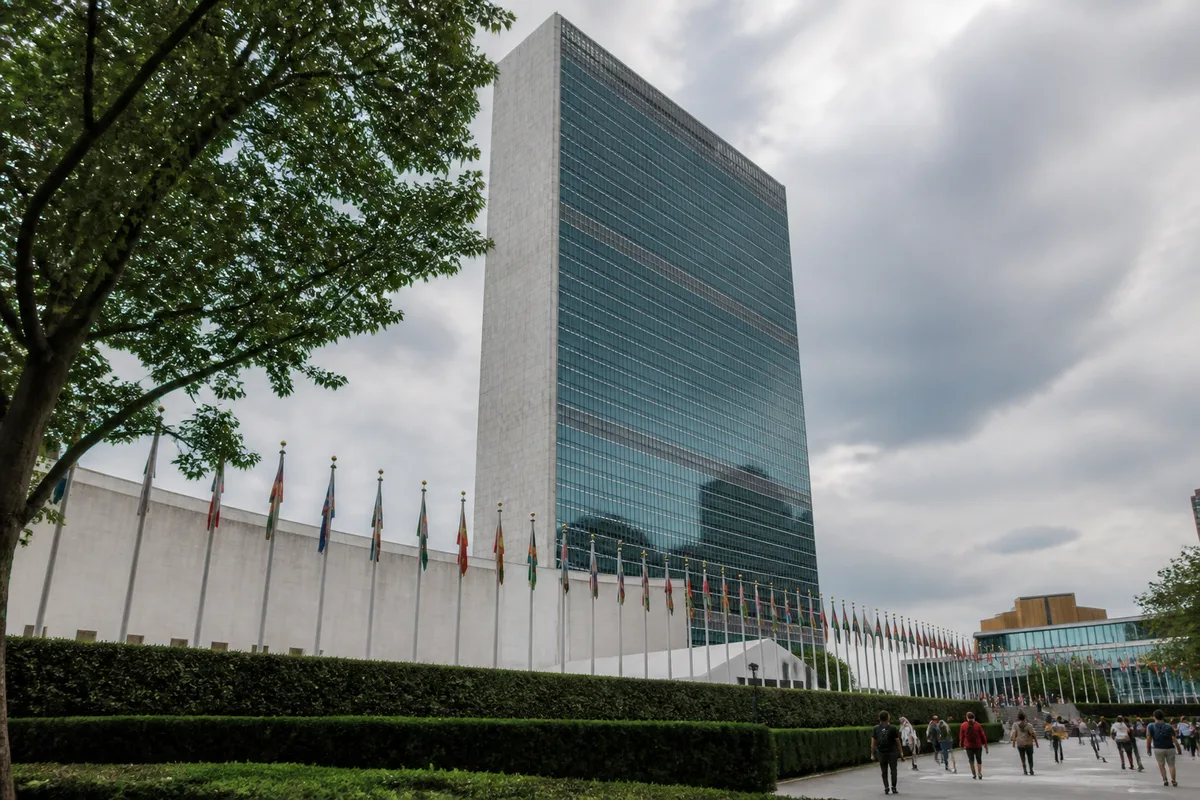
The last country to join the UN is commonly presented as Montenegro, admitted in 2006. South Sudan is generally presented as the last state to become independent, on July 9, 2011.
Conversely, an entity may exercise territorial control or have institutions without obtaining the same level of international recognition. This is precisely why the cases of Taiwan, Kosovo, and the Sahrawi Arab Democratic Republic must be presented separately from the total of 195.
When in doubt, the correct title is the one that specifies the scope: “193 UN members,” “195 including the two observers,” or “249 countries and statistical areas.” This wording gives the reader the category, not just an isolated number.
Useful sources to consult
- United Nations: Member States: list and institutional framework of members; use: to check the scope of the 193 states.
- United Nations: Non-member States: status of the Holy See and the State of Palestine; use: to understand why two observers complete the total.
- United Nations, M49 nomenclature: statistical classification of countries or areas; use: to compare a geographic count with a political count.
- UN, Non-self-governing territories: distinction between territories and states; use: to avoid automatically adding a dependency to the 195 countries.

The reference date of this article is September 29, 2026. International statuses evolve through political and institutional decisions; therefore, any change in the total must be linked to an admission, a resolution, or a clearly identified status change.
Frequently Asked Questions
Are non-self-governing territories countries?
No. A non-self-governing territory falls under a distinct regime and does not automatically become a sovereign state or a UN member. Its inclusion in a geographic database is therefore not sufficient to change the total of 195.
Why can a map show more borders than the total number of countries?
A map can represent dependent territories, administrative zones, or entities with limited recognition. The number of visible shapes or names then depends on the legend, not solely on the count of states.
.magic-lb-overlay.open{display:flex}
.magic-lb-overlay img{max-width:95vw;max-height:95vh;object-fit:contain;border-radius:8px;box-shadow:0 8px 32px rgba(0,0,0,.5)}
.magic-lb-close{position:absolute;top:16px;right:20px;color:#fff;background:rgba(0,0,0,.5);border:none;width:40px;height:40px;border-radius:50%;font-size:24px;cursor:pointer;display:flex;align-items:center;justify-content:center}
.magic-lb-close:hover{background:rgba(0,0,0,.8)}
.wp-block-image img{cursor:zoom-in;transition:transform .15s ease}
.wp-block-image img:hover{transform:scale(1.01)}
.magic-img-link{display:inline-block;text-decoration:none}
(function(){
var ov=document.getElementById(‘magic-lb’);if(!ov)return;
var img=ov.querySelector(‘img’),btn=ov.querySelector(‘.magic-lb-close’);
var L={fr:’Fermer’,es:’Cerrar’,en:’Close’,pt:’Fechar’,it:’Chiudi’,de:’Schlie\u00dfen’,nl:’Sluiten’,ca:’Tancar’};
btn.setAttribute(‘aria-label’,L[(document.documentElement.lang||”).slice(0,2).toLowerCase()]||’Close’);
function open(src){img.src=src;ov.classList.add(‘open’);document.body.style.overflow=’hidden’}
function close(){ov.classList.remove(‘open’);img.src=”;document.body.style.overflow=”}
document.addEventListener(‘click’,function(e){
var a=e.target.closest(‘a.magic-img-link’);
if(a){e.preventDefault();open(a.getAttribute(‘href’));return}
var i=e.target.closest(‘.wp-block-image img’);
if(i&&!e.target.closest(‘a’)){e.preventDefault();open(i.currentSrc||i.src)}
});
ov.addEventListener(‘click’,function(e){if(e.target===ov||e.target===btn)close()});
document.addEventListener(‘keydown’,function(e){if(e.key===’Escape’)close()});
})();