
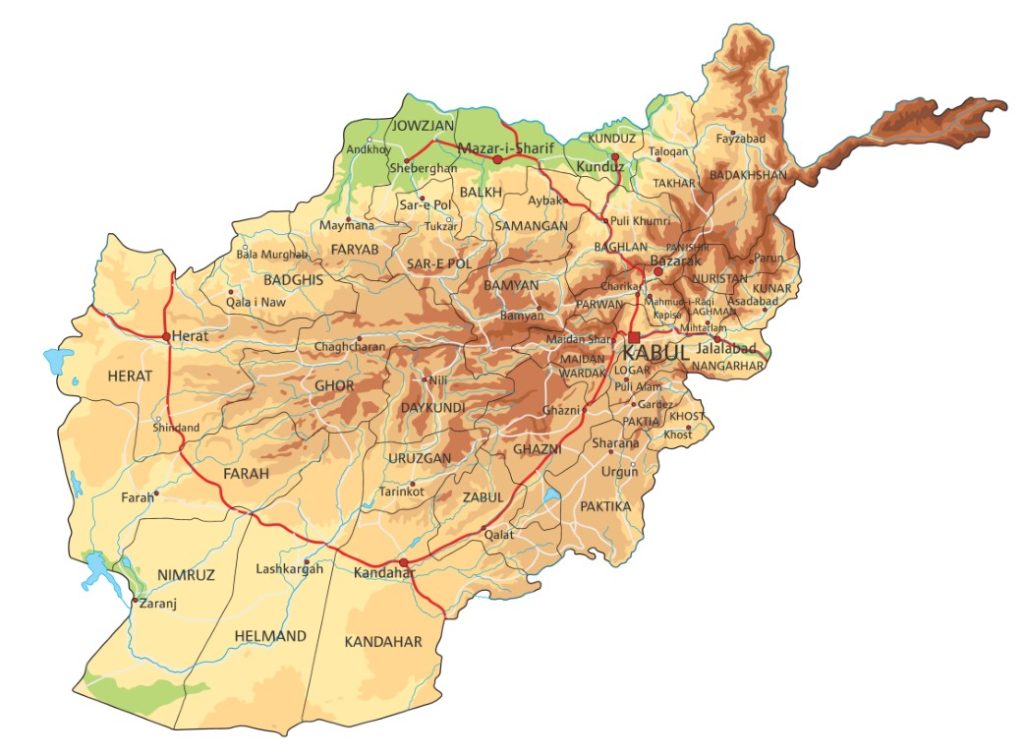
Afghanistan is a landlocked country located in Central and South Asia, with no access to the sea. It covers an area of 652,230 km² and has an estimated population of about 43.8 million people in 2025. The Afghan population is made up of several ethnic groups, the largest being the Pashtuns, Tajiks, Hazaras, and Uzbeks, along with smaller communities such as the Turkmens, Aimaqs, Baloch, and Nuristanis.
What you need to know about Afghanistan ?
The largest urban area and also the capital of Afghanistan is Kabul, and the official language of the country is Pashto with 42% of speakers; the second most spoken language is Tajik (24%). The telephone code in Afghanistan is 93, that is 0093 or +93.
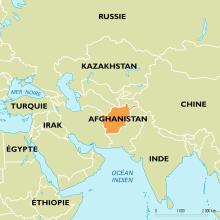
Which countries border Afghanistan?
The neighboring countries of Afghanistan are Pakistan, Iran, Turkmenistan, Uzbekistan, Tajikistan, and China.
Population of Afghanistan
Afghanistan’s population is estimated at about 43.8 million people in 2025, with an annual population growth rate of approximately 2.2%. The birth rate is around 34 births per 1,000 inhabitants, while the death rate is approximately 6 deaths per 1,000 inhabitants.
Life expectancy at birth is estimated at around 66 years. The fertility rate remains relatively high at about 4.4 children per woman, although it has declined compared with previous decades. The sex ratio is close to 105 males for every 100 females, with a broadly balanced distribution across age groups.
The people of Afghanistan are known as Afghans. The country’s main ethnic groups are the Pashtuns, Tajiks, Hazaras, Uzbeks, as well as Turkmens, Aimaqs, Baloch, and several other minorities. The country’s two official languages are Pashto and Dari (Afghan Persian), while several regional languages are also spoken, including Uzbek, Turkmen, Balochi, Pashayi, and Nuristani.
What are the colors of the country?
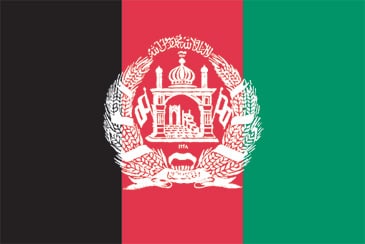
The Afghan flag consists of 3 colors arranged in vertical stripes of equal size. From left to right, there is black, red, and green. In the center of the flag, there are the national emblems.
Black represents the darkness and the dark past of the nation. Green is a symbol of fortune and the Islamic religion, and red represents the blood shed for the country’s struggle for sovereignty.
What are the best cities to visit in Afghanistan ?

Kabul
Kabul is the capital of the country and the largest urban area of Afghanistan. It is also a very ancient city dating back over 3500 years. You can see several ancient sites there such as the Abdul-Rahman Mosque, the Afghan National Museum, the Historic Garden, and Babur’s parks.
The mosque in question is modern as it was consecrated in 2012, but its design follows the traditional Islamic structure, featuring 14 arches and two minarets.
Balkh
Balkh is a very ancient city and according to the Arabs, it is the mother of the cities of the East. Halfway between East Asia and the Middle East, the city of Balkh was an ancient Buddhist territory before the Arab incursion.
Moreover, the remains in the old city clearly show constructions that still reflect Buddhist architecture and Asian cultures. For example, there are the remains of the Green Mosque and the Nine Domes Mosque, which are magnificent places to visit. Furthermore, they are part of the world monuments under monitoring as they are endangered sites.
Kandahar
This city was formerly the city of Alexandria dating back to 329 BC. It is the second largest urban area in Afghanistan but also one of the oldest metropolises most diverse in terms of culture and history. You will see the Kandahar Friday Mosque, which was a place of worship considered the most admirable in the country.
Mazar-e Sharif
According to the city’s history, Mazar-e Sharif was formerly a sanctuary that was built in the center of the city before the surrounding infrastructures. Tourists come for the so-called Blue Mosque as well as the basilica of Hazrat Ali. The city is located in Balkh province but is also its capital. It is the cradle of many cultures as well as several ethnicities and a variety of colorful cultural differences.
Herat
Herat is a city located in the western part of Afghanistan, it still holds the country’s historical remains. Among them are the Herat Citadel, the tomb of Queen Goharshad, and the Friday Mosque. Currently, the said mosque is still active and most of its rooms are still functional; however, several objects and frameworks have been replaced by more recent works. After the main entrance, there are several artisan shops that work on facades and create mosaics.
Bamiyan
It is one of the smallest Afghan cities, also an ancient region of Buddhist occupation and a city located in the center of the country. Moreover, it is rich in cultures between the East and the West, which is the crossroads of Bamiyan archaeology and Turkic cultures.
There are also remains of exchanges made with Persians, Indians, and Chinese in ancient times. That is why there are several Buddha statues, some of which have only remained in good condition; there are also caves with mural frescoes dating from the 5th to the 9th century as well as the reclining Buddha.
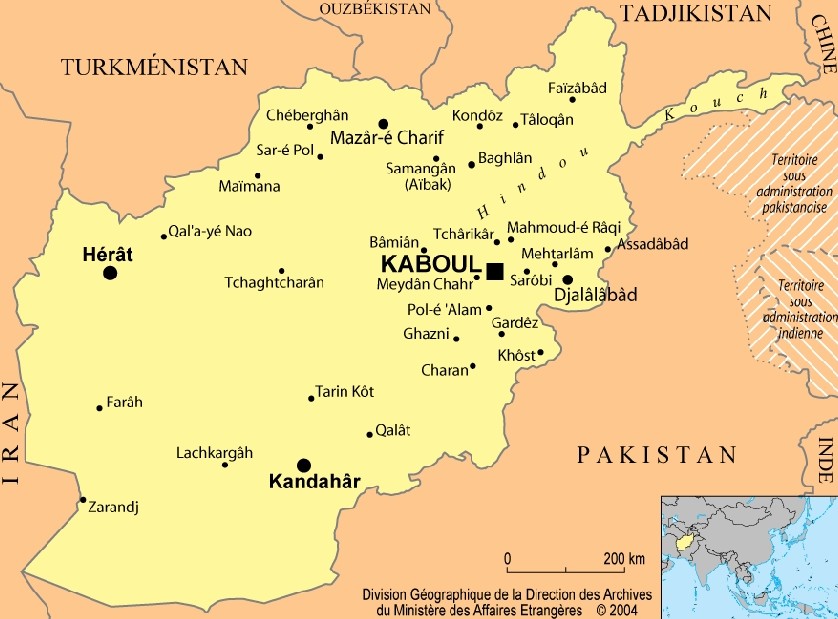
Where the cities are located on the map of Afghanistan ?
Kabul
On the map of Afghanistan, the capital and largest city is located in the eastern part of the country, in the province of the same name. Geographic coordinates: 34°31’01’’N, 69°07’59’’E
Balkh
On the Afghan map, the city of Balkh is located in the central section of the country, slightly to the north in the province of the same name. It is crossed by the Balkh-Ab river. Geographic coordinates: 36°27’18’’N, 66°31’59’’E.
Kandahar
On the map of Afghanistan, the city of Kandahar is located within Afghan territory, slightly in the southern section of the country. It is a city located at the confluence of the Arghandab, which is a river abundant in water. Geographic coordinates: 31°37’01’’ north, 65°43’01’’ east
Mazar-e Sharif
The city of Mazar-e-Sharif is located in the north-central part of Afghanistan; it is the capital of Balkh province. Geographic coordinates: 36°43’ north, 67°07’ east
Herat
This city is the closest to Iranian and Turkmenistan territory; it is located in the western section of the country and is the capital of the province of the same name. Geographic coordinates: 34°34’01’’ north, 62°19’59’’ east
Bamiyan
The small city of Bamiyan is located in the central section of Afghanistan and in the province of the same name. Geographic coordinates: 34°49’ north and 67°49’ east
Afghanistan climate Map
The climate of Afghanistan is divided into 4 distinct periods corresponding to summer, spring, autumn, and winter. The entire Afghan territory experiences scorching summers and chilly winters, characteristic of a dry continental climate.
The lower elevation areas of the territory show an average temperature of 20°C in winter and over 48°C in summer; associated with such heat, the summer season is very dry.
The higher altitude areas have colder winter temperatures around -25°C, while summer temperatures hover around 38°C. In mountainous parts, long snowfalls often occur, lasting up to 4 months.
The winter period usually takes place between April and October, but this period may vary according to altitude. The rainy season and autumn are often confused, and rainfall during these seasons ranges between 1000 and 1500 mm annually.
Afghanistan economic map
Due to heavy immigration, Afghanistan has recently experienced waves of GDP deflation. Currently, several investors originally from the country but living abroad have returned, and the country’s economy has significantly improved.

Over the past several years, Afghanistan has continued to develop its transport infrastructure, although many roads remain damaged by conflict and lack of maintenance. The country’s main road corridors facilitate trade with neighboring countries, including Pakistan, Iran, Uzbekistan, Turkmenistan, Tajikistan, and China.
Since the Taliban returned to power in 2021, international assistance has changed significantly. Development funding has declined sharply, while humanitarian aid coordinated by the United Nations and numerous non-governmental organizations remains essential for supporting the population. Afghanistan’s nominal gross domestic product (GDP) is estimated at around US$17–18 billion, while its GDP at purchasing power parity (PPP) is estimated at approximately US$80 billion.
The country’s GDP per capita is estimated at about US$400 in nominal terms and around US$1,900 in PPP terms. Afghanistan remains heavily dependent on imports of food, fuel, manufactured goods, and industrial products. Its main exports include dried fruits, fresh fruits, nuts, saffron, carpets, and some precious stones, resulting in a significant trade deficit.
Afghanistan possesses substantial natural resources, including deposits of copper, iron ore, lithium, rare earth elements, gold, and other minerals, with an estimated potential value exceeding US$1 trillion. However, much of this mineral wealth remains undeveloped because of investment challenges, infrastructure limitations, governance issues, and the country’s political environment. Afghanistan also faces high unemployment, a relatively small industrial sector, and an economy that remains largely dependent on agriculture and informal activities.
- Official currency: Afghan Afghani (AFN)
- Nominal GDP: approximately US$17.7 billion
- GDP (Purchasing Power Parity – PPP): approximately US$80 billion
- GDP ranking: around 117th worldwide (nominal) and 96th worldwide (PPP)
- Annual GDP growth: approximately 2.7% (latest estimate)
- GDP per capita (nominal): approximately US$400
- GDP per capita (PPP): approximately US$1,850GDP per capita in Purchasing Power Parity: 2070 USD.
- Inflation rate: approximately -7% (deflation recorded during 2024–2025)
- Unemployment rate: approximately 14% of the labor force (estimated, as official labor market statistics remain limited)
Administrative and demolinguistic data
Administrative subdivisions
Afghanistan is divided into 35 provinces as follows:
- Badakhchan
- Bâdghîs
- Baghlan
- Balkh
- Bamiyan
- Deykandi
- Djozdjan
- Farâh
- Fâryâb
- Ghazni
- Ghor
- Helmand
- Hérat
- Kaboul
- Kandahar
- Kapisa
- Khost
- Kounar
- Kondôz
- Laghman
- Lôgar
- Nangarhâr
- Nimroz
- Nouristan
- Oruzgan
- Paktiya
- Paktika
- Pandjchir
- Parwan
- Samangan
- Sar-e Pol
- Takhar
- Wardak
- Zabol
Demolinguistic data
The Afghan population is composed of several ethnic groups and different speakers. The languages used in the country are mainly Pashto and Dari or Persian. These are the two Indo-European and official Afghan languages. There is a dialectal variety of Persian also called Dari. It is mainly spoken by the ethnic minorities Tajik, Ḥazāra, Chahar Aimak, and Kizilbash.
There are also Persian dialects including Dari and Tajik. The speakers of these languages are spoken in Tajikistan. The last Afghan dialect is Pashtun, which is spoken in small urban areas. It is also a variation of Persian.
FAQ – Afghanistan map: Practical information and country overview
Afghanistan is a landlocked country located in Central and South Asia. It shares borders with Pakistan, Iran, Turkmenistan, Uzbekistan, Tajikistan, and China.
The capital of Afghanistan is Kabul, which is also the country’s largest city. It serves as the nation’s main administrative, economic, and cultural center.
A map of Afghanistan helps identify the country’s major cities, borders, mountain ranges, and main transportation routes. It also provides a better understanding of the country’s geography and territorial organization.
