📋 Essential to remember: Personally, I consider organizing your travel toiletry bag the single most effective way to streamline airport security checks, as over 90% of carry-on delays stem from improperly packed liquids. Choosing a water-resistant bag with hanging hooks maximizes bathroom space in small hotel rooms. Just make sure all liquid containers stay strictly under the 100 ml limit for carry-on travel.
It’s the accessory no one thinks about before packing their suitcase, and the first one to ruin a trip when poorly chosen. A shower gel leaking on clothes, a bottle confiscated at the airport, ten minutes spent searching for a nail clipper: the toiletry bag deserves better than the old model that’s been lying around for years.
💬 My experience: During my trip to Lisbon last July, I switched to a hanging clear TPU toiletry bag that cost €18. Hanging it on the bathroom door hook saved counter space in my compact hotel room, and passing through airport security took under 3 minutes. Always double-cap shampoo bottles with plastic wrap under the lids to prevent cabin pressure leaks during flights.
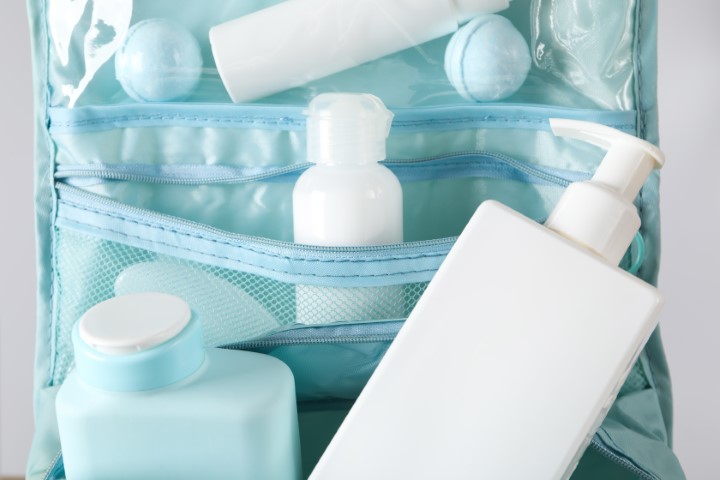
Investing in a well-designed toiletry bag for your travels solves these three problems at once, provided you know what to look for. Size, materials, organization, airplane rules: here is the complete guide.
To prepare your full luggage setup, explore carry-on luggage dimensions and rules for major airlines. Learning how to prepare for trips abroad ensures stress-free packing overall. You can also read tips on booking travel accommodations to suit your journey style.
The right size is chosen according to the length of the stay
First common mistake: taking one too big “just in case,” and carrying empty space. The capacity is calculated based on the actual duration of the trip.
| Length of stay | Recommended size | What it contains |
|---|---|---|
| Weekend (2-3 days) | Small size, about 1.5 L | Toothbrush, travel-sized products, the bare essentials. Fits in a backpack. |
| Week (4-7 days) | Medium size, about 5 L | The complete routine: face, body, hair care, makeup. |
| Long stay or family (10 days and more) | Large size, about 7 L | Standard bottles, bulky accessories, spare products, can be used by several people. |
Good practice if you alternate weekends and long vacations: two bags are better than one oversized one. The small one lives in the gym bag between trips, the large one comes out for summer.
💡 Do you know? Switching from liquid shampoo and body wash to solid bar alternatives can reduce your toiletry bag weight by up to 60% while completely bypassing airport liquid volume limits.
The four criteria that make a good toiletry bag
✅ Advantages
Clear compartments speed up security screening and daily item retrieval.
Waterproof linings prevent spilled liquids from staining packed clothes.
🔻 Weaknesses
Multi-compartment bags add extra bulk to minimal carry-on backpacks.
Rigid frames reduce flexibility when squeezing luggage into tight spaces.
The first criterion is invisible in photos: water-repellent fabric and a waterproof bottom. Everyone has experienced shampoo that sneakily opens at the bottom of the luggage. With a washable bottom, the incident is solved with a sponge wipe instead of condemning the bag.
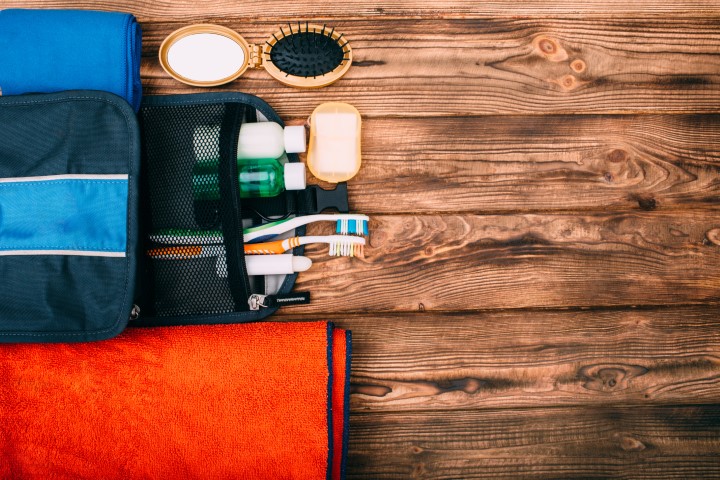
The second is the wide-angle opening: a bag that opens widely shows all its contents at a glance, while a narrow opening turns every search into an archaeological dig.
Third criterion, separate compartments. Storing makeup away from toothpaste and jewelry apart from bottles prevents mixing and scratches, and saves real time every morning.
Last point, the zipper. It’s the part that breaks first on low-end models, and a bag that no longer closes by the third day of a two-week trip has no value. The quality of the zipper should be tested in-store or checked in reviews.
⚠️ Common mistake : Packing full-size product bottles in checked luggage without sealing lids is a frequent error. Cabin pressure changes during flights cause unsealed containers to expand and leak over clothing.
On a plane: the 100 ml rule, without exception
If you travel with cabin luggage, your bag must comply with security rules. Each liquid, gel, or cream is limited to a container of 100 ml maximum, and all must fit in a one-liter transparent plastic bag per passenger.
Beware of the container trap: a 200 ml tube half empty is still forbidden; it’s the bottle’s capacity that counts, not what’s left inside. Aerosols are also prohibited in the cabin; replace spray deodorant with a stick.
The trick that simplifies everything: switch to solid formats. Shampoo, soap, and toothpaste in solid form escape the liquid rule, weigh less, and never leak. Your one-liter bag then remains available for products that only exist in liquid form.
💡 Practical tip : Decant liquid skincare products into 30 ml or 50 ml silicone travel bottles instead of 100 ml containers to save up to 50% physical volume in your TSA airport bag.
Prepare it well: the three-step method
First step, the unique checklist. Write your routine list once and for all (hygiene, care, basic pharmacy, accessories) and keep it on your phone: nothing is forgotten, nothing is bought twice on site.
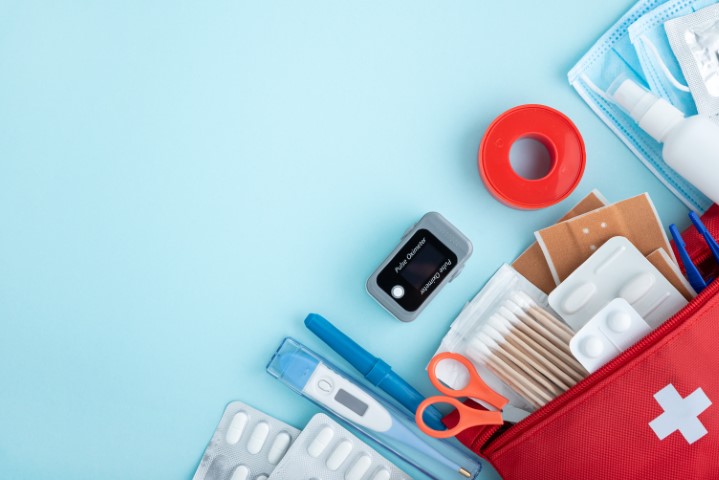
Second step, permanent travel sizes. Rather than transferring at each departure, keep dedicated minis in the kit that you refill upon return. The kit stays ready to go in ten minutes.
Third step, organizing by use: a morning compartment, an evening compartment, the pharmacy separately. At the hotel or in the refuge, you only take out what you need.
A well-prepared kit means a departure without a mental checklist at 6 a.m.
Maintenance and durability: the kit you keep for years
A quality kit is simply maintained: a damp cloth and a bit of soap on the waterproof bottom suffice, most models are not machine washable. This little regular maintenance changes everything for the lifespan.
Durability is actually the real economic calculation. Buying a cheap kit every year that ends up stained at the bottom of a closet costs more, for you and for the planet, than a resistant model kept for years. Some brands fully embrace this bet: Cabaïa, for example, guarantees its products for life and displays a B Corp certification, the sign of a manufacturer who expects their kit to last longer than your next destinations.
Choose it once, keep it for a long time. That’s the whole philosophy.
Toiletry liquid volume estimator
Calculate total liquid volume needed for your travel duration
FAQ: toiletry kit and travel
Count about 1.5 L for a two to three-day weekend, 5 L for a week with a full routine, and 7 L for long stays or shared family bags. Choosing too large means carrying empty space, too small forces sacrifices: the length of the stay is the only good criterion.
Yes, provided you respect the liquids rule: maximum 100 ml per container, all gathered in a transparent plastic bag of one liter per passenger, and no aerosols. The bottle capacity counts, not its fill level, and solid products are entirely exempt from this rule.
Choose a bag with a waterproof bottom and water-repellent fabric, seal bottles with plastic wrap under the cap for flights, and favor solid formats for shampoo and soap. In case of an accident, a washable base can be cleaned with a sponge wipe without leaving any marks.
Most toiletry bags are not machine washable: a damp cloth with a little soap on the waterproof base and walls is sufficient. A quick cleaning after each trip, with the bag open to dry, significantly extends its lifespan.