
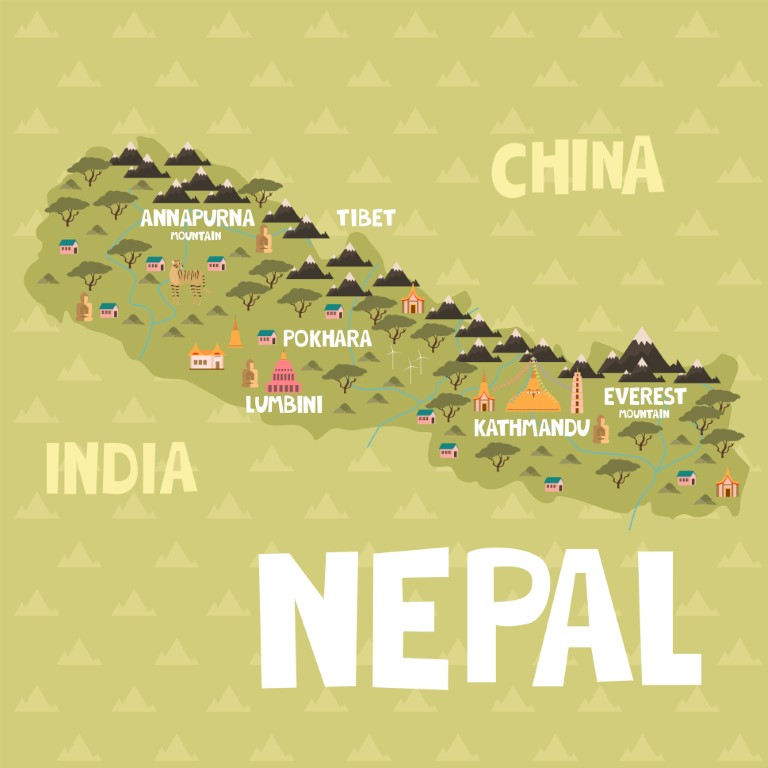
Discovering Nepal means diving into a fascinating territory where majestic mountains, lush valleys, and diverse cultures coexist. Whether the goal is to travel, hike, or simply better understand this country between India and China, the Nepal map becomes an essential tool. Different types of representations are available, each meeting specific needs: geographical map, road map, topographic, tourist, or political. Understanding their uses opens the door to a rich and smooth exploration of Nepal.
The different types of maps dedicated to Nepal
Depending on the intended use, there are several types of adapted maps to navigate or plan a trip to Nepal. Each classification offers a precise perspective on the territory, facilitating both travel and understanding of its natural and administrative features.

Some highlight the impressive relief of the Himalayas, while others emphasize the structure of cities and localities, or reveal the political divisions of the country. Taking the time to choose the right map helps avoid many surprises and optimize every expedition.
Table – Nepal: Geographical and demographic information
| Element | Key information |
|---|---|
| Total area | 147,516 km² |
| Capital | Kathmandu |
| Neighboring countries | China (Tibet), India |
| Estimated population | ~30.9 million inhabitants (2025) |
| Population density | ~210 inhabitants/km² |
| Relief | Himalayas (Everest 8,849 m), hills, Terai plain |
| Climate | Varied: subtropical in the south, temperate in the center, alpine in the north |
| Official language | Nepali |
| Economic resources | Agriculture, tourism (trekking, mountaineering), hydroelectricity |
| Special feature | Country of Everest, roof of the world |
What is the purpose of a geographical map of Nepal?
The geographical map provides a global view of the relief and physical characteristics of Nepal. It notably shows the emblematic mountain ranges, including Everest, but also the lowlands of the Terai in the south. This type of representation is useful for appreciating the immense diversity of the territory, from steppes to snow-capped peaks.

Visualizing the main borders and locating the major regions of Nepal makes itinerary planning easier. Curious travelers can thus plan varied stops, from Chitwan National Park to the high valleys near Tibet.
The Nepal map illustrates a landlocked country at the heart of the Himalayas. It highlights its borders with India to the south, east, and west, and with China (Tibet) to the north. Its territory stretches from the fertile plains of the Terai to the highest peaks in the world, including Everest.
Additional points about the Nepal map
- Nepal is a landlocked country between India and China.
- Its physical map is dominated by the Himalaya mountain range, including Mount Everest.
- The south (Terai plain) is densely populated and fertile.
- Kathmandu and the surrounding valley concentrate a large part of the population.
- The country is world-renowned for trekking and mountaineering.
Why use a political map of Nepal?
For those interested in administrative organization, the political map shows administrative zones, electoral districts, as well as boundaries between districts. This division details the complexity of Nepal’s federal system with its recent provinces and local subdivisions.
Having this political map allows for a better understanding of the institutional context, especially if the stay includes official procedures or meetings with local stakeholders.
Travel efficiently with the tourist map and road map
Preparing your trip to Nepal often involves consulting a tourist map to identify major points of interest and must-see landscapes. These documents highlight temples, historical monuments, and remarkable natural sites spread throughout the territory.
At the same time, the road map quickly becomes essential to connect different localities, cross regions, and anticipate the quality of the transport network. The complementarity of these two maps ensures smooth travel, even on sometimes winding roads.
What advantages does the tourist map offer for Nepal?
Choosing a tourist map means betting on the clarity of information regarding main attractions, recommended routes, and suitable accommodations. Symbols also indicate wildlife reserves as well as cultural paths around the most beautiful pagodas.
This approach helps organize a balanced trip between urban discovery in the Kathmandu valley and immersion in the traditional villages of Mustang or Dolpo. Identifying strategic points in advance avoids missing out on unique experiences.
What is the purpose of a road map during a road trip in Nepal?
Traveling through Nepal with a reliable road map allows you to anticipate distances and travel times. Due to the mountainous terrain, some roads require patience and increased vigilance. The document indicates main routes connecting Kathmandu, Pokhara, or Biratnagar, as well as secondary tracks leading to Himalayan passes.
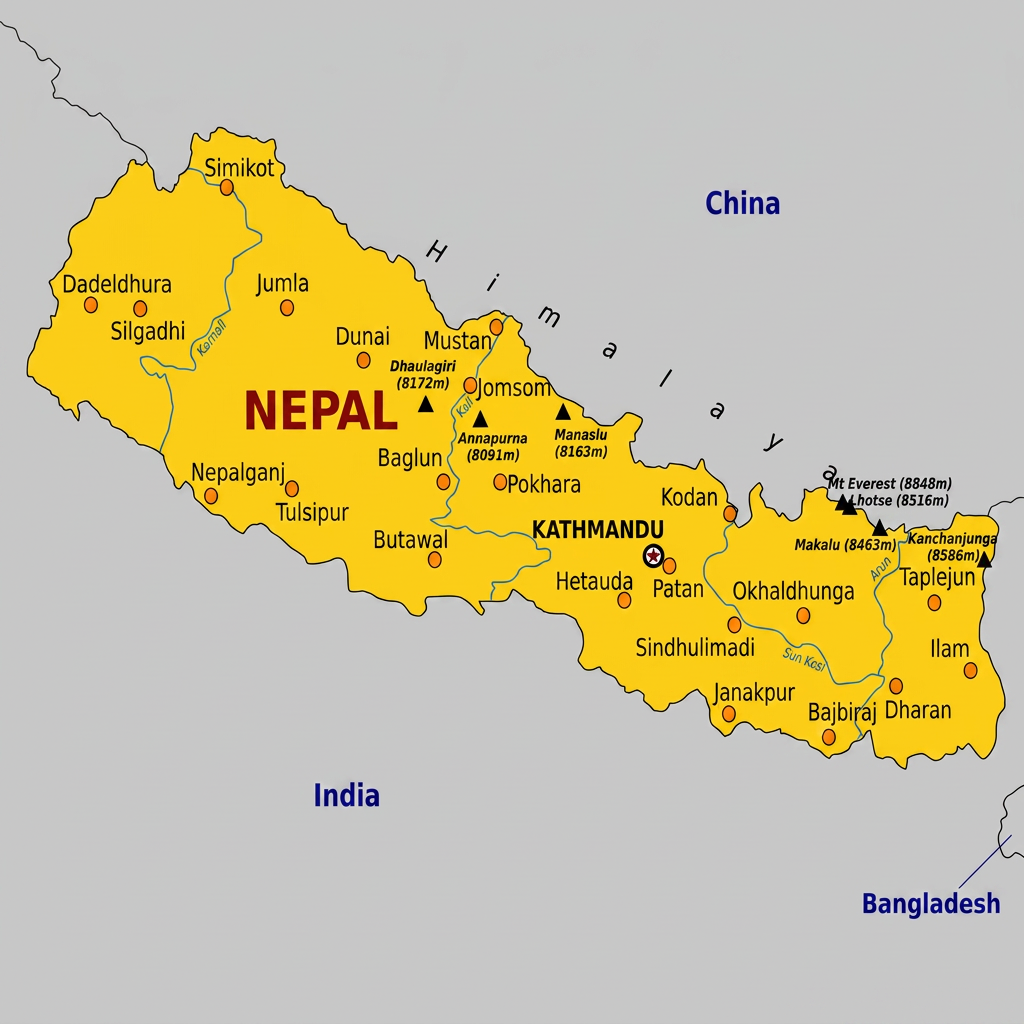
Regularly updated, the road map signals changes due to the rainy season or infrastructure works. Such a tool promotes true autonomy when traveling outside major cities.
Understanding the terrain: the value of physical and topographic maps
Exploring Nepal sometimes requires venturing far off the beaten path, where knowledge of the terrain becomes crucial. This is where precise documents like the physical map and the topographic map come into play.
Their reading reveals everything that shapes the Nepalese landscape, from the course of rivers to the high plateaus, including the iconic peaks that form the backbone of the country.
How to read a physical map of Nepal?
The strength of a physical map lies primarily in the indications of relief: altitude, mountain ranges, watercourses, and natural prefectures appear clearly. It also shows fertile plains as well as the arid zones of the northwest.
This support provides a solid basis for understanding the variety of climate and the distribution of habitats. When choosing a region to observe wildlife, flora, or simply admire grand panoramas, this general overview facilitates all decisions.
Why choose a topographic map for trekking or hiking?
Undertaking a trek in the Himalayas or preparing an ascent requires a detailed topographic map. It includes all contour lines, slope variations, high-altitude shelters, as well as difficult passages to identify on standard maps.
Thanks to this support, each stage can be anticipated: crossing a pass, bypassing a ravine, or locating an isolated village are challenges that require precision and adaptation. This type of map remains favored by local guides and lovers of wide open spaces.
Must-see cities and localities on a map of Nepal
Nepal is expressed through a set of cities and localities rich in history and cultural diversity. Many travelers want to assess distances, determine the best starting point for an expedition, or simply compare the advantages of different cities.
Being able to locate the urban centers such as Kathmandu, Bhaktapur, Patan, or Pokhara on a precise map greatly simplifies planning the itinerary. Smaller localities, especially those nestled in the heart of the mountains or remote rural areas, often hold the most beautiful surprises.
- Kathmandu: meeting point of multiple tourist routes and a major cultural center.
- Pokhara: a city appreciated for its lake and as a starting point for hikes towards the Annapurnas.
- Lukla: a mandatory passage to access the Everest region.
- Patan and Bhaktapur: witnesses of Newar architectural heritage.
- Jomsom, Namche Bazaar, or Tansen: localities with unique charm on Himalayan routes.
Identifying these key places and their access ensures optimal organization of the journey. It also allows for spontaneous stops depending on the weather or traditional festivals.
Extending exploration to the regions and administrative zones of Nepal
Understanding the territorial division of Nepal involves clearly distinguishing its regions and administrative zones. Since adopting the federal model, the country is divided into seven provinces, each with its own identity, distinct natural resources, and local languages.
A good map allows one to visualize these internal borders and their influence on urban development, access to education, or resource management. It also provides an essential framework for those wishing to get involved with local communities or undertake humanitarian projects.
- Province No 1 to the east: privileged access to the hills and the Indian border.
- Province No 2: major agricultural area of the Terai.
- Bagmati: economic centrality and urban density around Kathmandu.
- Gandaki: renowned mountains and biodiversity of the Annapurnas.
- Lumbini: spiritual and heritage cradle of the Buddha.
- Karnali and Sudurpashchim to the west: wild and less frequented territories.
This administrative framework adds an additional dimension to any analysis or visit project. It notably sheds light on differences in access to healthcare, schools, or road infrastructure depending on the province crossed. Having an updated map is therefore essential for anyone wishing to understand the country as a whole.
FAQ – Nepal map: 3 questions
Nepal is located between India and China, in the heart of the Himalayas.
The capital is Kathmandu, in the central valley of the country.
The country is dominated by the Himalaya mountains but also has hills and fertile plains to the south.
