
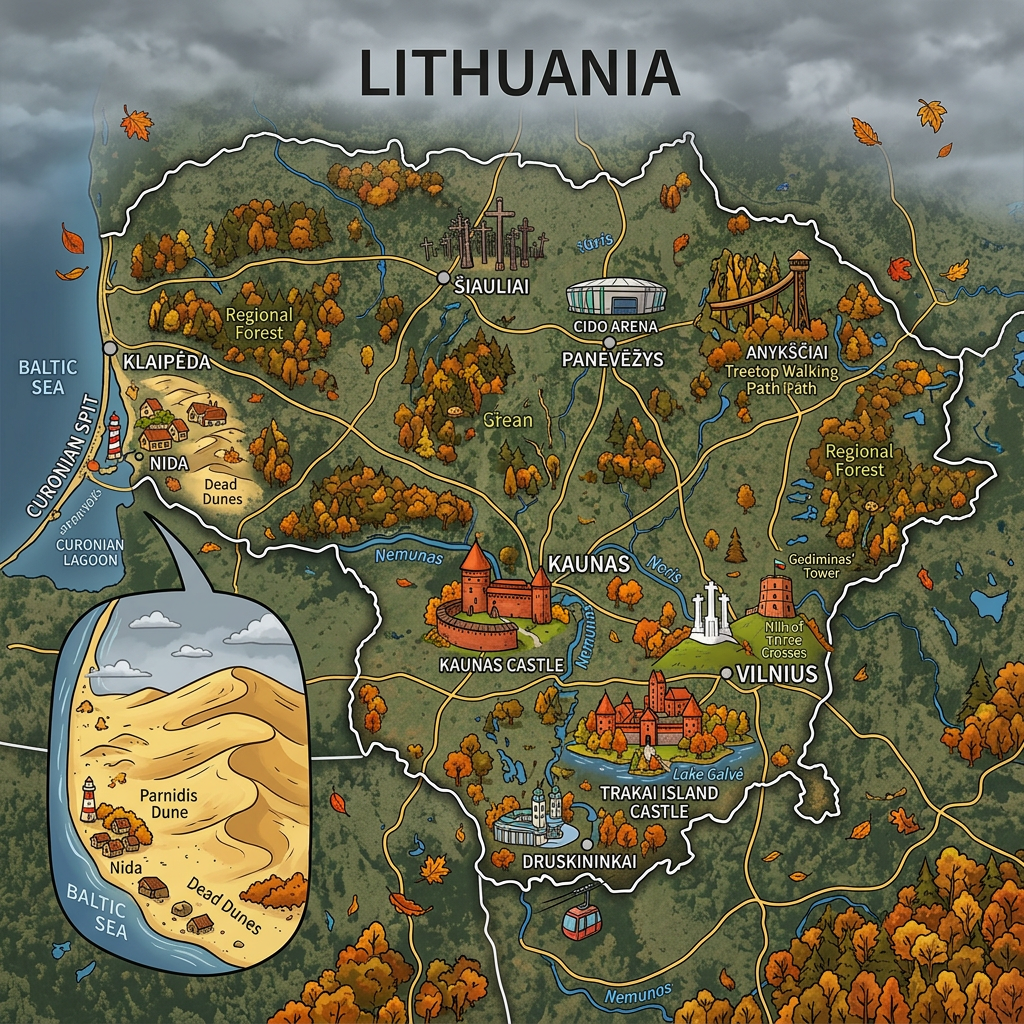
Lithuania is a republic in Europe, this country is located in the Baltic region and in the southernmost section.
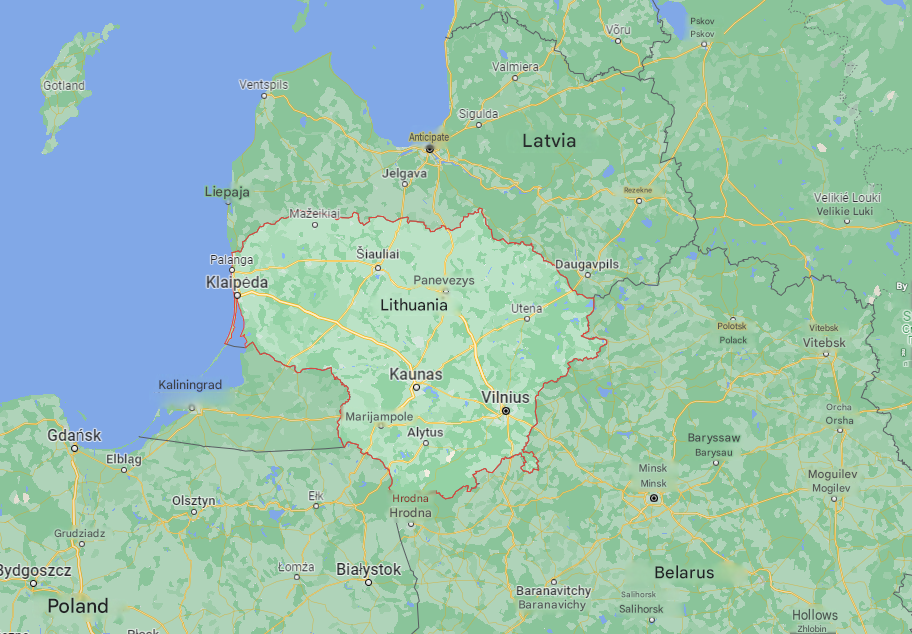
Bordering the Baltic Sea, Lithuania also shares its borders with four neighbouring countries. Lithuania’s population is currently estimated at around 2.9 million inhabitants, living across an area of 65,300 km².
The largest Lithuanian cities are Kaunas, Klaipėda, and Vilnius, which is also the capital of the country. The Lithuanian people are a Baltic people, one of the oldest in the southern section.
They speak Lithuanian, which is also the official language of the country and a living Baltic language still in use. The telephone code in Lithuania is 370, i.e., 00370 or +370.
Which countries border Lithuania?
The neighboring countries of Lithuania are Belarus, Poland, the Kaliningrad Oblast enclave, and the Baltic Sea. They border the country respectively to the north, east and south, southwest, and west. Here are the lengths of the borders
- Lithuania-Russia: 227 km
- Belarus-Lithuania: 502 km
- Lithuania-Poland: 91 km.
- Latvia-Lithuania: 453 km
- Lithuania-Sweden: outer maritime border of the EU.
Population of Lithuania
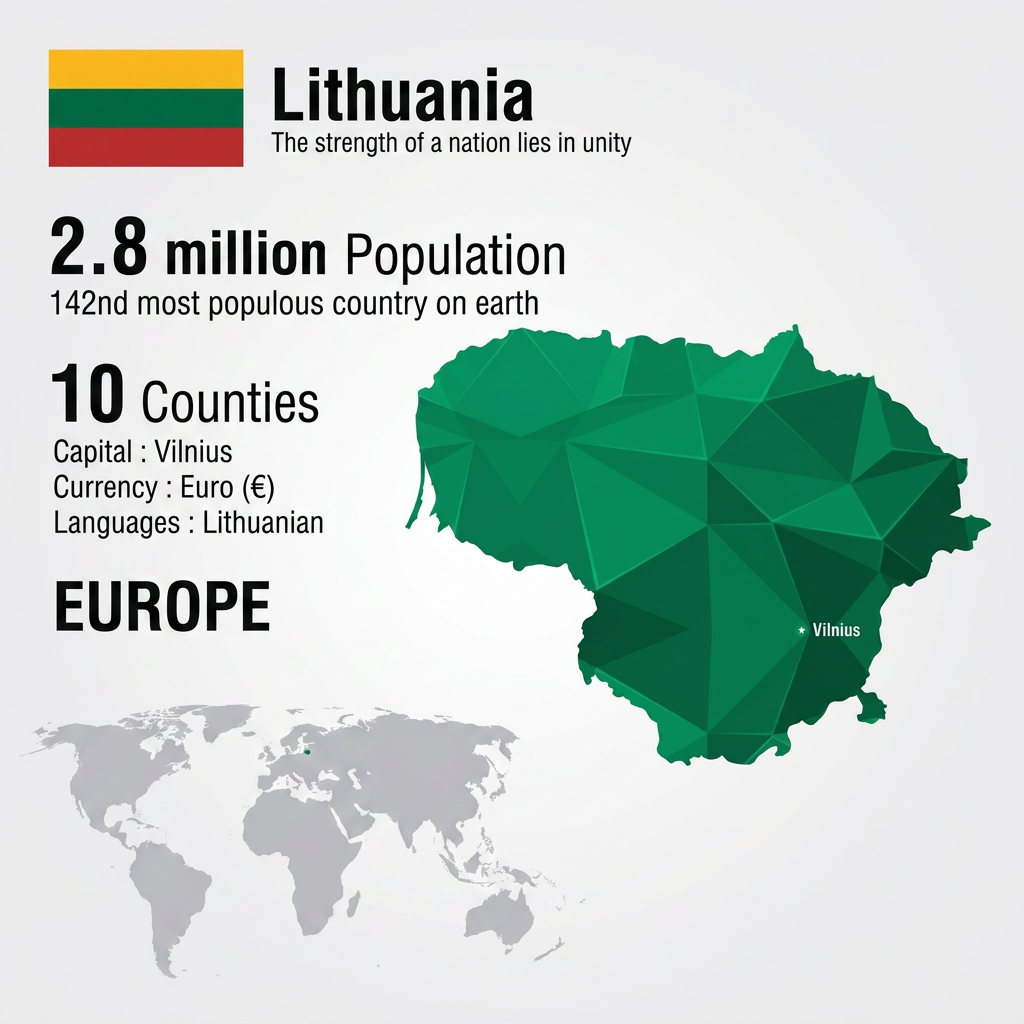
Lithuania’s population is currently estimated at around 2.9 million inhabitants. The country remains relatively homogeneous in terms of ethnicity, with the vast majority of residents being of Lithuanian origin. The median age is around 44 years, reflecting the country’s gradually ageing population.
In addition, the fertility rate is approximately 1.3 children per woman. Lithuanians make up about 84% of the population. The main ethnic minorities are Poles, Russians, Belarusians, and Ukrainians, who form the country’s largest minority communities.
What are the colors of the country?
The Lithuanian flag is a very old flag with unique colors. Indeed, it consists of three bands of equal length and width. The colors from top to bottom are: yellow, green, and red.
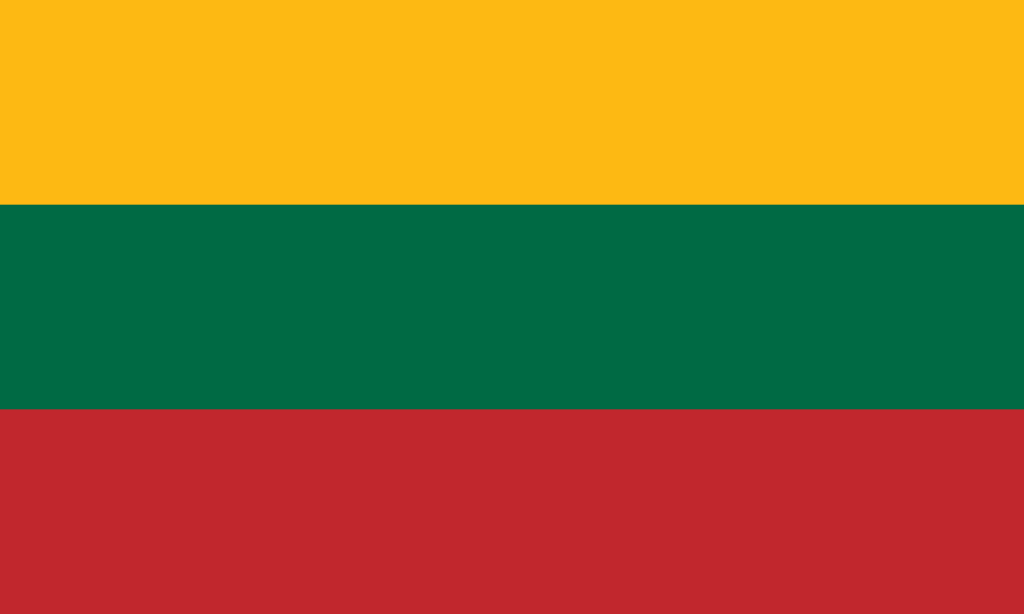
The meanings of the colors are as follows:
- Yellow: representative of the country’s wheat fields
- Green: representative of the colors of nature and forests.
- Red: representative of patriotism
Overall, the colors of Lithuania signify assurance for the future, the freedom of the people, and the courage of Lithuanians.
What are the best cities to visit in Lithuania ?

Vilnius
This city is both the largest in terms of area and the Lithuanian capital. It is also a magnificent city and one of the most beautiful cities in the Baltic States.
Hosting several cultural attractions and modern leisure activities, the city of Vilnius is full of gothic and unusual architecture. You will see ancient cathedrals, magnificent restaurants, and friendly cafes there.
The squares you absolutely must visit are Cathedral Square and the Church of St. Anne. Don’t forget to visit the Jewish quarter with the synagogue dating back several centuries and the Gediminas Castle.
Kaunas
Located in the central part of Lithuania, the city of Kaunas is the second largest and most populous city in the country. It is crossed by the Neris and Nemunas rivers. Moreover, its location near the capital and the port city allows Kaunas to be the hub of the country’s economic and commercial exchanges.
This city is especially known for its natural parks and the ancient architecture of its old town. You will also see several artists expressing Lithuanian culture there.
Kaunas is 100 km from the capital and 212 km from Klaipėda. In the city, you will find museums, professional and amateur theaters, and several sports fields, notably for basketball and football.
It is a very sporty city with a young and mainly student population. The city of Kaunas is also the venue for some music festivals, including jazz and opera.
Here are the attractions not to miss: the town hall, the castle, and the presidential palace. Also take a walk in the new town and its avenue, after which you will see the Church of Archangel Michael and the central post office.
Finally, there are several museums and theaters, but the most popular remains the Konstantinas Ciurlionis Museum.
Klaipėda
Located in the western part of the country, the city of Klaipėda is a port city. It is 311 km from the capital. It is also the third most populous city in the country. The city of Klaipėda hosts the most functional port in the Baltic countries; moreover, it is an ice-free port because it was designed that way.
In addition to being a port and commercial city, Klaipėda offers breathtaking architecture based on old Bohemian design. You will see several historical monuments there, such as the old town theater, the sea museum, and the dolphinarium. It would also be a good idea to visit the Svyturys brewery and the Melnrage pier.
Šiauliai
The city of Šiauliai is the city of the sun according to the etymological meaning of its name. In fact, the city was named after the battle that took place there long ago. This battle was called the Battle of the Sun. The city of Šiauliai is known for being an industrial city; during the former Soviet domination, this city was the site of the Soviet nuclear power plant.
But the main tourist attractions remain the remnants of Christianity still present in the city. Thus, you can visit the Hill of Crosses, the cathedrals of Saint Peter and Paul. There is also a museum dedicated to bicycle enthusiasts and a lake with the Iron Fox sculpture.
Where the cities are located on the Lithuania map ?

Vilnius
It is located in the southeastern part of Lithuania in the center of the Baltic Europe. Geographic coordinates: 54° 41′ north, 25° 16′ east
Kaunas
Located in the central part of Lithuania, the city of Kaunas is the second largest city in the country. Kaunas is 100 km away from the capital and 212 km from Klaipėda. Geographic coordinates: 54° 54′ north, 23° 56′ east.
Klaipėda
The city of Klaipėda is located in the western part of Lithuania. It is also a port city on the Baltic Sea: Geographic coordinates: 55° 42′ north, 21° 09′ east
Šiauliai
The city of Šiauliai is located inland in the northern part of Lithuania. It is 214 km from the capital and 161 km from Klaipėda. Geographic coordinates: 55° 56′ north, 23° 19′ east
Lithuania climate map
Lithuanian topography shows fewer elevation changes and more flat terrain. As a result, the climate is similar throughout the territory. Like the other Baltic States, the Lithuanian climate is temperate continental. This type is characterized by harsh winters and hot but rainy summers.
The temperatures on the coast in winter hover around 0°C at the beginning of the year. However, in July and August, temperatures rise up to 18°C. As you move inland, temperatures increase.
Lithuania experiences consistent precipitation throughout the year. The driest periods are between February and April, and the coast is the rainiest part.
Winter is harsh and marked by fairly low sunshine. Temperatures often hover around 0°C or even lower. Most of the territory is snow-covered, and this period lasts from December to March.
Coastal areas have temperatures down to -3°C, and as you move inland, temperatures rise. Winter is also strongly influenced by cold winds from Russia, which can drop temperatures to -30°C during the harshest periods.
In spring, winter temperatures rise until April. This month is marked by alternating cold and warm temperatures, and it can even snow occasionally. The first temperature increases mainly occur from the second half of May.
Summer is marked by maximum sunshine lasting more than 12 hours, and temperatures are warmer. Indeed, they range between 18 and 23°C. Sometimes, temperatures rise significantly to 30 to 35°C due to the influence of warm currents from southern Europe.
Autumn is divided into two parts: the first half, during September, still shows pleasant temperatures. The second half, however, brings the first snowfalls. This second part of autumn generally begins between October and November.
Klaipėda
Temperatures in this port city are more or less mild throughout the year. Indeed, summer sunshine hours are maximal, and annual rainfall is 780 mm. However, swimming is prohibited due to very low water temperatures ranging between 2 and 18°C.
Vilnius
The capital is located in the heart of the continental zone, which is why the rainfall there is lower, about 680 mm per year. The city’s sunshine is at its maximum during the summer periods, but it rains a lot in the afternoon.
Economic map of Lithuania

According to economic data provided by the World Bank, Lithuania shows a high income compared to its neighbors. It is a so-called liberal and mixed economy because the most influential sectors are services, industry, and agriculture, which represent respectively 68.3%, 28.5%, and 3.3% of GDP. In terms of global economic ranking, Lithuania is in 41st position.
The country is also part of the European Union, NATO, and the OECD. Its official currency is therefore the Euro. The country’s exports constitute a significant part of the gross domestic product because for the past 3 years, they have represented more than 81% of it.
Moreover, the GDP growth rate has increased since the global financial crisis of 2009. Currently, the growth rate reaches 3.6%, which earned Lithuania the qualification of the Baltic Tiger.
- GDP: approximately USD 80 billion (nominal), around USD 150 billion (PPP).
- GDP per capita: approximately USD 28,000 (nominal), around USD 52,000 (PPP).
- Average gross salary: around EUR 2,400 per month.
- Average net salary: around EUR 1,500 per month.
- Exports: more than USD 45 billion per year.
- Foreign reserves: approximately EUR 7 billion.
Administrative subdivisions and demolinguistic data
Administrative subdivisions
Currently, Lithuania is subdivided into: Apskritis, Municipalities, and Seniūnija. The Apskritis is an autonomous administrative and territorial division. Lithuania has 10 of them.
- Alytus
- Kaunas
- Klaipėda
- Marijampolė
- Panevėžys
- Šiauliai
- Tauragė
- Telšiai
- Utena
- Vilnius
Municipalities are similar to French communes; there are currently 60 in Lithuania.
The Seniūnija is the smallest subdivision in Lithuania; there are currently 546 (plural seniūnijos). The seniūnijos are equivalent to municipal districts in France.
Demolinguistic data
Most of the Lithuanian population speaks the official language, which is also the mother tongue. Native Lithuanian speakers thus represent 85% of the population. Minority speakers are Russians and Poles, representing respectively 7.2% and 5.3%. The country’s first foreign language is English, which is also a language of instruction in some schools. In others, Russian and French are taught. More than 80% of Lithuanian students know English.
FAQ-Lithuania map: Geographical and demographic information
Lithuania is a Northern European country located on the southeastern coast of the Baltic Sea. A map helps show its location between Latvia, Poland, Belarus, and the Russian exclave of Kaliningrad.
A map of Lithuania shows the main cities, regions, rivers, lakes, and major roads. It also helps locate the Baltic Sea coastline, forests, and protected natural areas.
Lithuania has a population of around 2.9 million people, with most residents living in urban areas. Vilnius, the capital, is the country’s largest city and its main political, economic, and cultural center.
