Prague is a fascinating city that attracts millions of visitors each year. But where exactly is this historic city located? Situated in the heart of Central Europe, Prague is the capital of the Czech Republic, a country rich in culture and history. This article invites you to discover the many geographical and historical aspects that make Prague a unique and unmissable place.
Geographical location of Prague
Central Europe: strategic position
Prague occupies a strategic position in Central Europe. It is located on the Vltava River, the longest river in the country, which gives it a special charm with its iconic bridges and lively quays. As a nerve center, Prague is well connected by various means of transport, facilitating access from different regions of Europe.
The Czech Republic is bordered by Germany to the west, Poland to the north, Slovakia to the east, and Austria to the south. This geographical situation allows travelers to easily combine their visit to Prague with those of neighboring capitals and cities such as Berlin, Vienna, or Krakow. With its modern infrastructure, it is simple to travel by train, bus, or even car to explore these destinations.
The Bohemia region: an enchanting natural setting
Prague is located in the historic region of Bohemia, surrounded by picturesque landscapes ranging from mountains to lush forests. Its gentle hills offer breathtaking views of the city and its surroundings. Beyond its urban character, the region also offers outdoor activities such as hiking, cycling, and even skiing during the winter months.
This proximity to nature makes Prague an ideal destination for those who wish to alternate between cultural visits and escapes into nature. Bohemia is also renowned for its thermal springs and spas, offering moments of relaxation after a day of urban discovery.
The history and architecture of Prague
A city marked by history
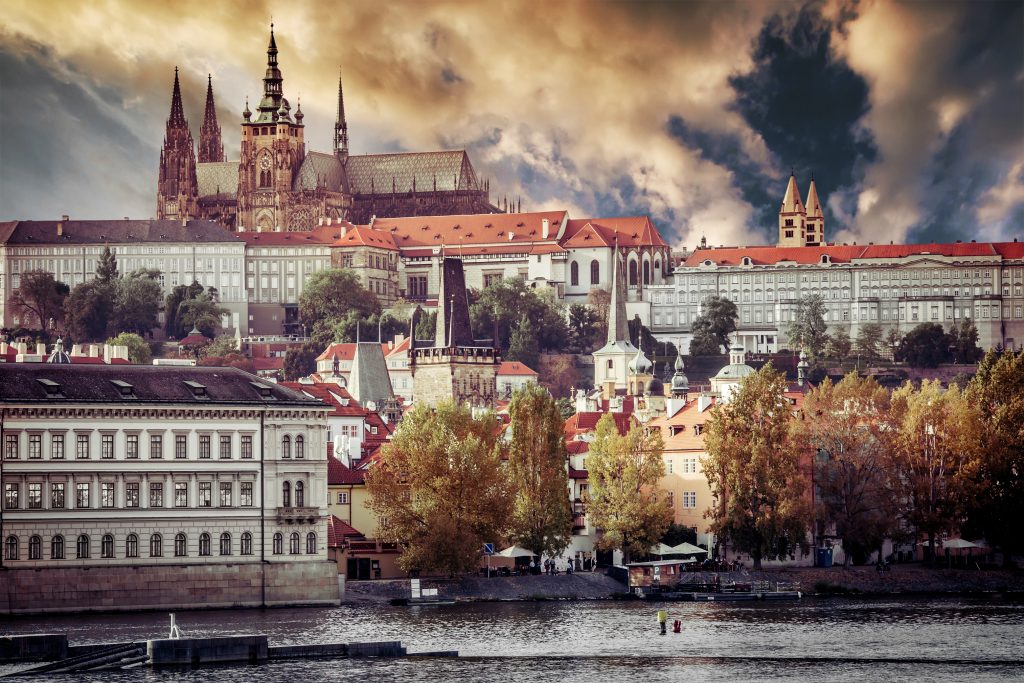
One of the most captivating aspects of Prague is its rich and complex history. Founded in the 9th century, the city has gone through various historical periods, each leaving its indelible mark. From medieval remains to traces of the Austro-Hungarian Empire, and through the communist past, every street in Prague tells a unique story.
The Prague Castle is undoubtedly one of the strongest symbols of this history. Perched on a hill overlooking the city, the castle offers a fascinating glimpse into architectural evolution through the centuries. From St. Vitus Cathedral to the various royal palaces, it attracts history lovers and architecture enthusiasts alike.
An architectural gem
Prague is often described as an open-air museum thanks to the diversity and richness of its architecture. Various styles can be found there: Gothic, Baroque, Renaissance, Art Nouveau, and more. This variety reflects the cultural and artistic influence of different eras.
Among the iconic monuments is the Charles Bridge, famous for its baroque statues lined up along its parapets. This bridge connects the two banks of the Vltava and offers a panoramic view of the city. The Jewish quarter, with its synagogues and old cemetery, is another fascinating example of Prague’s unique architecture.
Contemporary Importance of Prague
A Tourist City Par Excellence
Today, Prague is a leading tourist city, attracting millions of visitors each year. Its unique blend of architecture, culture, and history makes it a popular destination for short stays and longer trips.
Tourists are particularly charmed by the old town with its historic square and astronomical clock, which is one of the major attractions. Strolling through the cobblestone streets, stopping at a traditional café, or enjoying a cruise on the Vltava are all must-do activities in Prague.
Dynamic Capital of the Czech Republic
As the capital of the Czech Republic, Prague is also an important political and economic center. It houses the government, parliament, and the main public and private institutions of the country. This capital status strengthens its key role within the European Union and Central Europe.
The city experiences constant development, with investments in infrastructure and services, while preserving its historical and cultural heritage. For expatriates and professionals, Prague offers a dynamic and cosmopolitan environment, with many career opportunities in various sectors.
Prague: A City of Art and Culture
Vibrant Artistic Scene
Prague is also known for its vibrant artistic scene. Museums, galleries, theaters, and concert halls enliven the city’s cultural life throughout the year. International events such as the ‘Prague Spring’ international music festival attract artists and audiences from around the world.
The city offers a multitude of performances, ranging from traditional operas to jazz concerts, as well as contemporary art exhibitions. This cultural diversity makes Prague attractive to art lovers in all its forms.
Literary and Intellectual Heritage
Prague has been home to many famous writers, philosophers, and musicians. Franz Kafka, one of the most influential authors of the 20th century, was born in Prague, and his presence is still felt today through exhibitions and places dedicated to his work.
Charles University, founded in 1348, is one of the oldest universities in Europe and continues to play a crucial role in education and research. It helps maintain a stimulating intellectual environment and attracts students from all backgrounds.
Practical Tips for Visiting Prague
Best Time to Visit
Prague can be visited year-round, but each season offers a different experience. Spring and autumn are particularly pleasant thanks to moderate temperatures and fewer crowds. Summer is ideal for enjoying festivals and outdoor activities.
Winter, despite the cold, gives the city a magical atmosphere, especially during the holiday season, with its Christmas markets and festive decorations. Enjoy local culinary specialties and the warm atmosphere of the cafés then.
Transport and Accommodation
Getting around Prague is relatively easy thanks to an efficient public transport network including metro, tram, and bus. Buying a valid transport card for several days can be a wise choice to save money and facilitate travel.
Regarding accommodation, Prague offers a wide range of options, from budget hostels to luxury hotels. It is recommended to book in advance, especially during the high tourist season. Staying in the city center or in historic districts allows you to maximize the time spent exploring the main attractions.
Local Gastronomy
Czech cuisine is also worth exploring. Among the typical dishes to try are goulash, knedlíky (bread dumplings), and svíčková (marinated beef served with a creamy sauce). Desserts like trdelník, a sweet pastry shaped like a cylinder, are also very popular.
Don’t miss tasting the local beer, as the Czech Republic is known for its brewing tradition. Many craft breweries offer tours and tastings, allowing a better understanding of the importance of this beverage in Czech culture.
- Explore Prague’s parks and gardens
- Take a cruise on the Vltava
- Visit museums and art galleries
- Attend a performance at the National Theatre
- Taste local culinary specialties
Authenticity and Souvenirs
To bring back an authentic souvenir from Prague, consider local handicrafts such as Bohemian glass, wooden puppets, and handmade toys. These items not only reflect traditional Czech craftsmanship but also its rich culture.
Frequently Asked Questions
Prague is the capital and largest city of the Czech Republic, located in Central Europe. It is situated in the heart of the country, crossed by the Vltava River.
Yes, Prague is part of the Czech Republic, a landlocked country located in the heart of Europe, bordered by Germany, Austria, Poland, and Slovakia.
Prague is located about 330 kilometers from Vienna (Austria), 300 kilometers from Berlin (Germany), and 500 kilometers from Budapest (Hungary). It is well connected to other major European cities by train and air networks.