
What you need to know about the Val-de-Marne department ?
We present here another department that is part of the Greater Paris Metropolis. Therefore, this department normally belongs to Île-de-France, a region located in the north-central part of the country. The fact is that it is department 94, according to what Insee and the Post Office say.
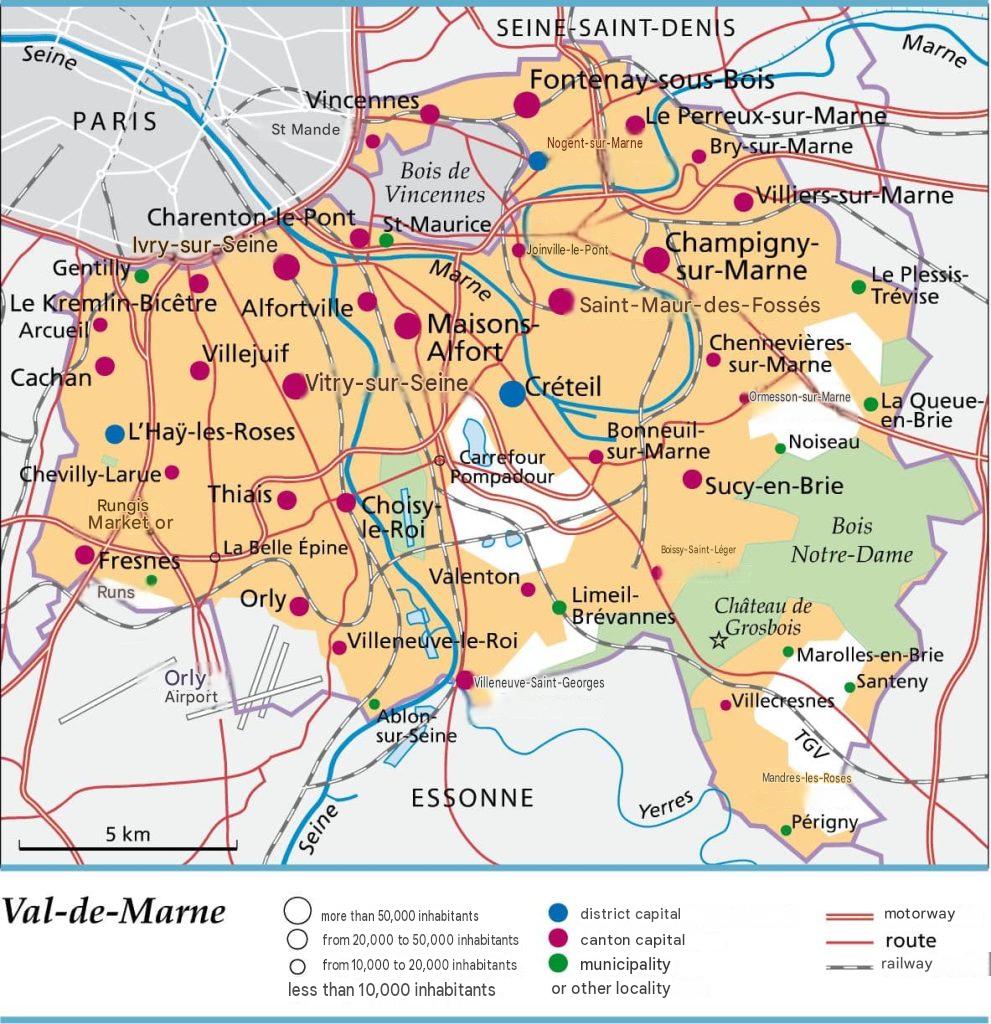
The name of this department is Val-de-Marne. It is a very old department as it was created in 1968; the territory it currently occupies was part of the Seine-et-Oise territory (only in part) and the territory of the former Seine department. The name Val-de-Marne actually comes from the fact that the department is crossed by the Marne river. The largest city in the department, which is also its capital and prefecture, is called Créteil, and its sub-prefectures are called Nogent-sur-Marne and Hay-les-Roses.
Demographically, the Val-de-Marne department has 1,433,113 inhabitants, also called Val-de-Marnais. The population density is 5,849 inhabitants per km², given that the department covers an area of 245 km². When it comes to administrative subdivisions, the Val-de-Marne department is divided into 3 arrondissements, 11 electoral constituencies, 25 cantons, the Greater Paris Metropolis (as the sole inter-municipal structure), and finally 47 communes.

Which departments border the Val-de-Marne department?
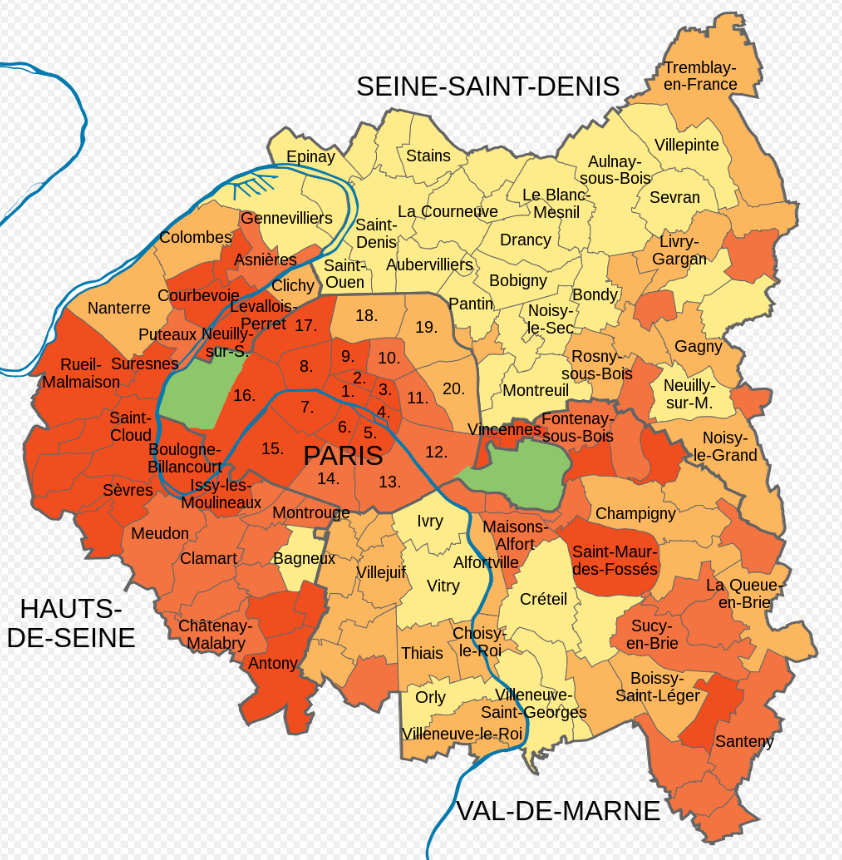
Indeed, the territory of Val-de-Marne being located in the part of Paris where Greater Paris is situated, its neighboring departments are called: the Seine-Saint-Denis department which borders it to the east-east, the Seine-et-Marne department which borders it to the east, the Essonne department which borders it to the south, the Hauts-de-Seine department which borders it to the west, and finally, Paris which borders it to the west or west-north direction.
What is the climate like in the Val-de-Marne department?
When talking about the Val-de-Marne department, even though it is an inland department, that is, without access to the sea, its climate is of a degraded oceanic type. That’s not all; this climate is also tempered by the influences of continental winds.
Therefore, it can also be said that it is a somewhat semi-continental oceanic climate. It is this type of climate that causes temperatures to rarely drop below 3°C during winter periods. On the other hand, during summer periods, temperatures are known to be slightly below 30°C and rarely exceed that.
This somewhat temperate climate makes the climate somewhat oceanic. Also, when talking about the amount of rainfall, it is known that precipitation does not exceed 650 mm per year. Most precipitation occurs in autumn and most precipitation falls mainly during summer periods, that is, when there are more thunderstorms.
Moreover, snow cover is not as extensive as there are about 11 days of snow per year. Additionally, the fact that the department is heavily urbanized makes the climate somewhat warm, but there is also the fact that pollution increases the loss of solar radiation by about 15 to 20%.
What are the most important cities in the Val-de-Marne department?
We have compiled for you the 10 best cities in the Val-de-Marne department; these are the 10 most visited tourist cities in the 94 department
- Charenton-le-Pont
- Nogent-sur-Marne
- Fontenay-sous-Bois
- Saint-Maur-des-Fossés
- Vincennes
- Joinville-le-Pont
- Créteil
- Champigny-sur-Marne
- Saint-Mandé
- Joinville-le-Pont
What are the largest municipalities in the Val-de-Marne department?
To establish this ranking, we referred to the area of the municipalities in the Val-de-Marne department, so here are the 10 largest municipalities in 94:
- Vitry-sur-Seine
- Créteil
- Champigny-sur-Marne
- Saint-Maur-des-Fossés
- Sucy-en-Brie
- Santeny
- La Queue-en-Brie
- Boissy-Saint-Léger
- Villeneuve-Saint-Georges
- Villeneuve-le-Roi

FAQ: Val-de-Marne map
The official departmental website offers an interactive map listing all cycling networks and greenways. You can also download these routes for your daily commutes or leisure rides.
Yes, tourist maps highlight the many departmental parks and green spaces open to the public. These documents make it easy to discover the recreational spots nearest to you.
The department provides guides and maps dedicated to walks along the Marne and Seine rivers. These resources make it easy to locate marinas and navigation areas.
